
Unlocking Human Potential At Scale - A Conversation With Jim Sponaugle
What does it look like when a Chief People Officer truly understands the business—not just the policies, but the work, the pressures, and the human potential of the people who run it?
In this conversation, Tom Dardick sits down with Jim Sponaugle, Chief People Officer at Utz Brands, to explore a fundamentally different approach to people strategy. Jim's is a non-traditional HR path. His experience is built from two decades in operations and P&L leadership.
Jim shares how his background in running businesses reframed his view of HR’s role: moving beyond compliance and administration to becoming a genuine driver of strategy, culture, and human potential. Together, Tom and Jim examine what happens when HR leaders deeply understand the business they serve. Jim shares how that understanding allows them to unlock performance, engagement, and fulfillment rather than simply manage risk.
Their conversation ranges from:
The shift from fixing what’s wrong to cultivating fulfillment and engagement
Why moving people from dissatisfaction to neutrality requires different drivers than moving them to full contribution
How misalignment between role and strengths quietly erodes engagement—and how leaders can address it early
Why focusing on the small portion of work that aligns with passion and strength can transform even difficult jobs
The dignity of work, the power of mindset, and the ripple effects of individual contribution
The importance of humility, curiosity, and lifelong learning in effective leadership
Jim also shares personal practices that support growth and openness, along with candid reflections on what it actually takes to develop people in real organizations, not in theory.
This episode will resonate with:
Chief People Officers and HR leaders
Executives and operators responsible for culture and performance
Leaders interested in engagement, fulfillment, and sustainable people strategy
Anyone thinking seriously about how organizations can support human growth at scale
This is not a conversation about perks or programs. It’s a grounded exploration of what becomes possible when people strategy is treated as a serious business discipline.
---
Listen to the podcast here
Unlocking Human Potential At Scale - A Conversation With Jim Sponaugle
It’s my great pleasure to welcome Jim Sponaugle to the show. You’re going to find a wealth. If you don’t have one ready, get a piece of paper and something to write with, because there’s a lot of wisdom that comes down the pipe through Jim’s view. Jim is the Chief People Officer for Utz Brands. If you’re in the Northeast, you probably know their products. I don’t know if they’re worldwide or not, but I know they’re a huge and very successful company, and have gone through changes.
It takes leaders like Jim to go through changes and to survive some of the things to adapt. We first met on a panel where we were talking about disruption. That conversation was so good that I felt like it had to keep on going. As a matter of fact, now I’m thinking about it. There was a question I was going to ask Jim that I forgot to ask, based on something that he said during the panel. Maybe we’ll have one again sometime. I’ll remember to ask him then.
Phenomenal viewpoint. This is somebody who has walked the walk and is a person of tremendous maturity and tremendous wisdom. Buckle your seatbelts and tune in to what Jim has to say about how we become aligned, how that works in an organization, how we navigate the challenges in the HR profession, and how we perhaps inspire the best in the people around us. As you know, if you’ve tuned in to Eye of Power before, this is exactly what we like to talk about. Welcome, Jim, to the show.
How Chief People Officers And HR Leaders Can Go Beyond Compliance
First, Jim, I want to thank you very much for joining me. I was looking forward to this conversation because we had such a great experience together on a panel where we were all sharing some great questions and discussions. I kept wanting that to keep going on. The people in the audience felt the same way. I was like, “You've got to come on our show so we can continue the discussion about disruption and change in the workplace.” That’s a great place for us to start, too. Where I really want to start is your story, your vantage, and how you got to be a chief people officer for a large company like Utz Brands. Let’s start with your walkthrough and how you got to where you are right now, if you don’t mind.
I’m happy to. It’s great to be here with you. I agree that the panel was electric and was a neat opportunity. I came into HR in a nontraditional way. There are probably a lot of HR professionals who have that same opening. HR finds you in a way, it seems. I’m super excited to be in the domain of HR. In essence, it pulls the leadership aspects that I loved in operations and allows me to work full-time on those concepts.
Can I interject right there for a second? There are different views of the HR profession. It’s something that’s needed. It’s a non-negotiable because if we have an organization, we have people, and we have to deal with the people side of things. A lot of times, the profession gets a little short shrift. There are a lot of organizations where the top HR person is seen as, “We got to have this person in on the meeting,” or some fall guilty of maybe just checking the boxes, being legalistic, and not fully embracing what the implications of people strategy are.
That’s central to any shared mission. I got that in Technicolor from you. That was one thing that I would guess, not knowing you that well. That’s probably coming from operations and so forth that gave you that breadth of view that maybe a lot of HR, if you just start in HR and only know HR, you might not have. I wanted your reaction to that observation.
I had the vantage point of twenty years in operations, P&L responsibility, KPI responsibility, key performance indicators, driving results, and leading teams. I loved that space and responsibility. General management was my path. Being able to go a mile wide and a couple of feet deep in all of the different functions of a business is what a good general manager can do and should be able to do. What I found during my career was that I was typically underserved by the HR function. As an operator of human resources, they would always say, “We’re here to support you.” I would say, “Great. Here are the things of which I need support.”
Invariably, to generalize, I was always typically underwhelmed with the level of support that I would get, which led to me doing a lot of it on my own. It pertains to hiring, firing, crucial conversations, org design, organizational effectiveness, performance management, spans, and layers. All of the things that help drive a good company were things that I worked on and did as a general manager and as an operator. I always had in the back of my mind, “This is such a neat function if approached in a different way.” I was so fortunate to have a great relationship with our current chairman, who was CEO at the time at Utz Brands. He and I used to talk all the time, meet, and connect.
I expressed this in different ways over the course of time. We hatched this idea of saying, “What if we put a reformed operator into the HR space? You know what it’s like to be served well. You know what it’s like to be underserved. What if we could have somebody from a client customer perspective come in to be on the other side of that?” That’s what we did. What ended up being the catalyst was this particular domain and function, if approached from a leadership, culture-driving, organizational development, and organizational effectiveness perspective, can be a force multiplier in a company. The compliance, the regulations, and the rules are certainly part of the function and part of governance in a business. No problem, but it shouldn’t end there.
In many companies, and perhaps in more of a traditional setting, that is what HR is known to be. That’s what the stereotype is known to be about. What if we can expand beyond that? What if human resources can truly be a business strategist at the table that’s helping bring people solutions to the table? We believe that HR is about understanding the business of human relations. You need to understand your own domain, but you also need to understand the business. You have to have business acumen to make the product, move the product, and sell the product. If you’re in professional services, what is your service?
HR is about understanding the business of human relations. HR leaders must have the business acumen to move and sell products.
That leads to a question for me. I circle the HR world a little bit because of the business I’m in, but I’ve never been in the middle of it where I was trying to get certified as a professional or anything like that. I’m wondering in the certification process how much content is in the domain that you were pointing to, Jim, where it’s generalized business knowledge, organizational knowledge, maybe not as much as, but at least emphasized as an important component to being effective as an HR professional.
The function itself, over the course of time, has fallen into perhaps the niche it’s in that’s compliance-oriented and regulation-oriented, likely due to the certification processes that tend to be more technical and tend to be more in that space. That part of human resources is incredibly important. You need to have that to have a well-performing company and a well-performing business. My push and the vision that we have at Utz, fortunately, our chairman had, and as we launched this idea. We’re six years in.
I was going to ask you that question.
What’s it to say? That’s good. You need that. What about the other components? What about the things that we mentioned? What about the leadership side and the culture side of a business? If you want to be a business strategist and be a business enabler, you need to be able to do both. You need to have both within your department. It may not be the same person. There are compliance-related people who are technically strong and good at that. We have those, and they’re phenomenal. You have to have that.
We also have people who are focused on the soft skills. They’re focused on the leadership and cultural side of things, the OD and the OE work. Those two teams come together to form a department, which then allows, as I was saying before, this idea that you understand the business of HR. You understand the business of the company. You bring or strive to bring people solutions to the table through attracting, retaining, or engaging employees to help the operators solve their problems in the business. They’ve got to move product. They’ve got to make product. They’ve got to sell product. They’ve got to sell professional services. They’ve got to engage their clients.
Whatever the business is, how does HR enable and unlock through people solutions? Since we need people to drive any business in any capacity, in any domain, then how do we, as HR professionals, eat, sleep, and breathe, unlocking human potential and bringing humans and people solutions to the table, which take a variety of different outcomes? Hiring, engagement, leadership, and development all fall under this idea of maximizing business effectiveness and helping business operators solve problems in their business. It’s a fascinating work. I get to spend 24-7 in that space. I couldn’t be happier.
Going From Dissatisfied To Satisfied
That’s awesome, Jim. As you lay all that out, I was thinking that there’s a little bit analogous to the field of psychology because forever, meaning going back perhaps to Freud or even before, the field was trying to fix what's wrong. We have these crises, depression, and anxiety, and we focus on trying to alleviate the things that are wrong. It has only been about 30 years or so that the field has branched into going from okay to better than okay. It seems like there might be something analogous here where the legalistic aspect of it is the guardrails that define what’s in and out of bounds as far as behavioral, how we treat people, and those sorts of things.
Within that playing field, we’re starting to pay attention to how we can expand. When you say force multiplier, you’re happy. You’re doing okay. You get good reviews. We don’t expect to lose you anytime soon, but are you feeling fulfilled? Are you working in a calling rather than just getting a paycheck and working there? I got the sense that your mind is more like in that space just as much, if not more, than the legalistic side of things. Am I reading that right?
You are. I love that, Tom. I love that thread, too, because they’ve studied this. People smarter than I say the drivers that help you go from dissatisfied to not dissatisfied are different drivers that take you from neutral to satisfied. It’s fascinating to say that comp, benefits, rules, policy, and hygiene get you from dissatisfied to neutral. The drivers to take you from neutral to fully engaged and fulfilled are career pathing, purpose, impact, clarity, culture, employee value proposition, and all these other cool drivers.
I saw you light up. I’m lighting up, too, because this is what I’m passionate about. It’s the best in human experience, not just mailing it in. Unfortunately, too much of our time is spent that way as a human experience overall. It’s emergent because when we’re in survival mode and when we don’t have resources, we revert to, “Where’s my next meal coming from? Who are my people?” or those level one kinds of issues. As we take care of those things, we can aim higher.
How People Can Blossom Into A More Expressive Version Of Themselves
I know we didn’t get too much into your personal story. We talked a little bit. I don’t want to neglect that. If you can weave that into this next line, please do. What I want to do is pick your brain about what we were pointing to in terms of the things that you see that expand. Maybe you’ve seen some people blossom into a more beautifully expressed version of themselves. What were the causes of that or the circumstances that helped create that, if you’ve seen that or however you think about it?
We’ve been fortunate enough to see that. That’s what we strive for. Our end game for any department and any person we’re working with is to find that unlock and that blossom where they’re starting to realize their full potential. A lot goes into that. It’s a concept that everyone can get their mind wrapped around, but then the execution is always a little more complex than the simplicity of the concept.
One of the things that has been a fun part of the journey for me is, and I know because of being a reformed operator, taking all of the HR concepts that float around that tend to be career pathing, strategic workforce development, unlocking potential, and some of the more conceptual things, jargon that you hear. How do you take those and operationalize them in your business? We all want to do that. What do we do tomorrow that’s going to be different than what we did yesterday? How do we take a step forward?
What are a couple of answers to that question?
From people’s potential, a huge part of this is you have to get to know the person, have that conversation, and have a cadenced, simple feedback loop. It doesn’t even need to be overly manufactured. It is 3 to 5 key questions that you give people ahead of time. Allow them time for reflection. Allow them time to talk to a couple of people that they work with and trust, and then come back, sit, and say, “This is what I want to do. This is how I think I can contribute. This is what I think I’m good at. This is how I think I can impact the business.” You go, “Okay.”
Based on people’s towering strengths, how can they fit into the function that they happen to be working in? How does their role and their role design fit around the towering strengths? How do you help them leverage what they’re strongest in to be able to impact their job and their career in the most profound way that they can? It’s super fascinating to do. What people say when I lay that out is, “What if their job is to do these ten things and they say, ‘I hate all those ten things. My towering strengths are these three things?’”
Let’s say that’s the scenario. You have a couple of options as an employer. You can say, “That’s interesting that there’s a misalignment between what you are good at and what you like to do in the job that we gave you.” Left unaddressed, that person likely will not work in that job for the next ten years. Organically, on its own, that person will likely leave you. What a gift. You’ve got an early indicator that you’ve got a misaligned person. If that person is a good culture fit, they’re a good worker. They’re just in the wrong job. You’ve got the key information to go find the right fit within your organization.
Addressing People Misalignment Within Your Team
In general, I wonder how much that costs, that misalignment you pointed to, where people are quietly going along. I had a white paper come out where I was studying the Gallup worldwide engagement that they do. Deloitte does something similar. The results are always, to me, very eye-opening. Worldwide, only one in five people are engaged in their work, feeling the way that we’re pointing to here.
It’s never going to be 100. That’s not even fixed. It seems to me like it could be switched where four are engaged and we have that one that’s in transition, that’s finding their way. That’s true because there are organizations that have a ratio closer to that. A function of leadership is what it comes down to in the ways that you were laying out. You said a couple of things there that I’m smiling ear to ear because it’s part and parcel of what we found out at The Mentor Machine, and it’s part of what we do. When you say towering strengths, we found through experience that if you want people to blossom and live into themselves, you have to give them that lever.
They don’t see themselves the way they could see themselves. They’re going to listen to the criticism that their teacher, their parent, or their peer gave them, and have that self-doubt. They’re going to protect against those things. We’re not going to listen with both ears open because we’re afraid of that criticism. Our strengths get ignored or, at least, not leveraged as much as they could. That’s one of the things that I’m sure you’re pointing to. When people see those towering strengths, and they have the opportunity to spread those wings and apply them, what a delta between the previous and that blossoming we’re talking about.
You touched on something interesting, too, that underpins a lot of this. That’s self-identity. You had mentioned the early criticisms in life, how people then build walls, how people view themselves versus how they could be viewed, and how oftentimes people outside of themselves view them. I truly believe our self-identity is our thermostat. I didn’t create that metaphor. That’s Maxwell Maltz in 1960, Psycho-Cybernetics. If the room temperature is set at 72 and it’s a hot day out, and the temperature gets to 73, 74, 75, the air conditioner kicks on. It’s barometer down to 72. If it’s cold, the heat is going to kick on.
Our self-identity is our thermostat.
People’s self-identity often sets the room temperature for where they’re going to go in an organization. To help people re-identify is the ultimate. You won’t always get that and get that deep with folks, but to help people understand what’s possible oftentimes takes a lot of encouragement and takes a lot of conversation to help people see, “You are actually self-identifying as being strong here and here, but I also see this, this, and this.” That bridges that gap.
Reframe Your Thinking To Change Your Attitude
We’re pointing in the right direction. I get the sense from you that that’s where your passion and energy go. I don’t know anything, but it seems to me like it’s probably true that it filters into the brand’s organization. You do see the effects of that. You’re dealing with people. You’re dealing with the real world. Everybody faces what I call the tyranny of the to-do list. We get busy, and then we lose sight of these things that we’re pointing to. The next thing that I’d like to get your view on is what gets in the way. Where does energy get blocked? Where are the things that you see that there are opportunities? If you had that magic wand, what would you change to let more of this stuff that we’re talking about happen in the world?
From a practicality perspective, if someone is tuning in now, they’re like, “That all sounds great, but we have jobs to do. We have to-do lists. We can’t custom-make everyone’s job around the things that they love to do.” All fair comments. The practicality and application, in my mind, and what we’ve practiced is helping people understand what they like to do, what they’re good at, what they want to do, how they want to impact, how they want to show up, and what gets their fire lit. Having those conversations isn’t terribly complex to do. There are questions, there’s introspection, and it’s a conversation.
Acres of Diamonds by Russell H. Conwell
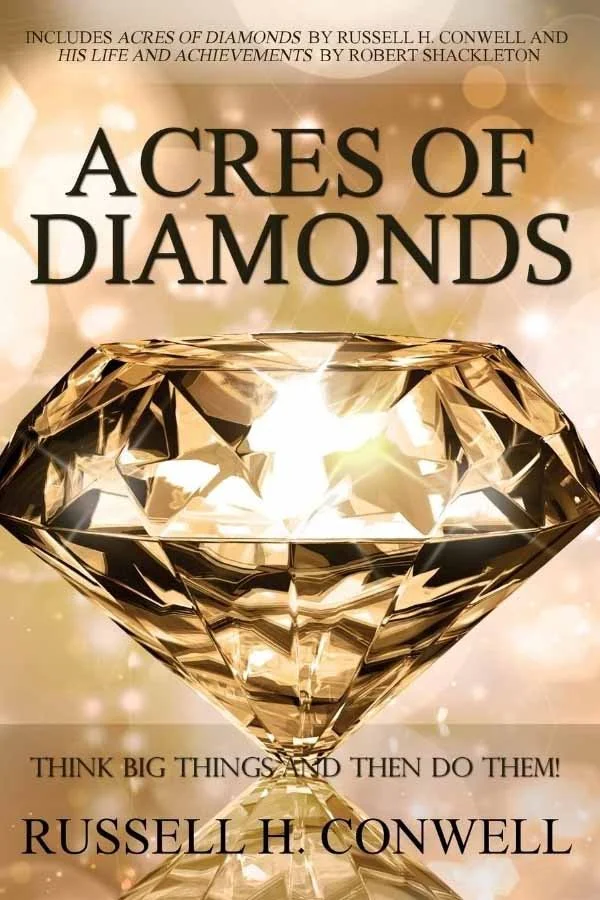
Part two is often how can they leverage those strengths in the job that they’re in today? How do they frame their current job, their current role, and bring their strengths to that current job and current role? It’s not all about leaving something and going into something new. It’s about reframing. It’s about shifting the paradox. Part three is helping people understand that you have acres of diamonds beneath your feet. There’s an awesome book metaphor about acres of diamonds. The guy goes and spends his whole life traveling the world to find diamonds. Sure enough, the old plot of land that he lived on had acres of diamonds beneath his feet, but he had never dug.
That’s the George Bailey thing, too.
That’s right. It’s right here. It is this idea of going, “Let me reframe. Here’s how I can bring my passions, my goals, my aspirations, and my strengths to my current role.” There is the reframing that there’s 20% of everyone’s job that they dislike. They may think it’s even more than 20%. They may think it’s 50%, 70%, or 80% on your job.
If you’re in customer service, it might be 80%. No one is calling in because they’re happy.
There are some tough jobs out there for sure. It is being able to reframe it to go, “Truly, if I look at it, is there 20% of the job that is everyone’s job?” That’s why they call it a job and work, because you’re going to get paid to do it. I love this. Look at celebrities. Look at professional athletes. You get them in candid moments. They’re complaining about the red carpet and complaining about the travel. No matter what you do in life, there’s 12%. It’s like, “I got to do that.”
That’s part of growing up. What do you think is perfect? It doesn’t exist.
That’s why the world rewards you with money. They say, “You’re doing that.” It is being able to go, “That’s cool. I know that I can’t get rid of all of the things I don’t like, but how can I make sure that I am stepping into what I’ve identified as things that get me motivated and are important to me, and apply that in the job that I sit in today?” It can change everything. This popped into my mind. Lou Holtz had this story. He perhaps took it from someone else, but they talked about the street sweeper. There were three street sweepers. They were working on a job site where they were building a cathedral.
The guy walked up and said, “What are you doing?” He goes, “I’m sweeping these streets.” He said, “What about you? What are you doing?” “I’m making $15 an hour.” To the third, he said, “What are you doing?” He said, “I’m cleaning the foundation for a beautiful cathedral that’s going to be built on the spot where people are going to bring their families. Generations will worship here for the next thousand years.” It’s the reframing of the same task. Which of those three do you think was doing the best job of street sweeping?
Best job and happiest about it.
It’s this whole power of purpose piece, too, to help people figure out.
There’s dignity in all work. If it’s worth somebody paying you to do something, there’s inherent dignity there because it’s something that has to be done. You’re serving somebody. What you just pointed to, I love that story because it shows you connecting to what the real ramifications are. Whenever I think about this, I always think of It’s a Wonderful Life because George Bailey has this big dream. He’s looking for the diamonds elsewhere in the world. He feels like it’s robbed because he has to stay out of obligation in Bedford Falls. He’s suicidal by the end of it because of all the things that have gone wrong. He gets the gift of seeing what would have happened if he had chosen a different path. It was heaven and hell differential, almost that much.
There’s a lot of truth to that in all of our worlds. We can create that ripple effect of good, but then I always think it would be interesting to tell that story from the perspective of Potter. What if there were no Potter? What would Bedford Falls be? That might be a completely different thing. It’s not that we’re inherently going to be this creator of all good, and if we take away the ripple effects, everything crumbles. I do believe that is the basic human condition because we are social creatures. Things do go and can go wrong. We can be centers of discord and harm and have ripple effects in that way as well. I love the wisdom that you shared there with the idea of framing. How we think about things does have an effect on our attitude.
There’s an interesting tie-in, too, with the events of the world, the events in our lives, and the circumstances to which we are subject. Stoic wisdom and various authors over the course of time and centuries have written about controlling the controllables and letting go of what is outside of the controllable. How do we set up? Life is going to unfold in front of us. There are going to be circumstances that we didn’t anticipate. Our reaction, thoughts, and attitude about the circumstances dictate everything.
They dictate the result. They dictate, oftentimes, the outcome. It is viewing things in a more objective perspective and not personalizing, “This happened to me. Why is this happening to me? Why is the traffic backing me up? Why is this line slowing me down?” to this idea that life is going to unfold, how life is going to unfold, traffic will be there, and lines will be there. How can you plug into that? How can you go with the flow of life rather than be in resistance to life and in resistance to every single circumstance because it’s not unfolding the way you want it to unfold?
If nothing else, it’s a tremendous waste of energy. You can’t control that person who is leaving that huge gap on a left turn, and that only two people got in when ten were in line could have gotten through.
It can take a lot of pressure off. It can take a lot of internal frustration, pressure, anxiety, and angst out of the picture because you start realizing, “It’s going to be my reaction. The circumstances are what they are. How am I going to leverage this circumstance and maybe get the most out of it?”
To wrap that line of reasoning you put out there, it sounds to me like it’s the process of growing up, of maturity, of coming into acceptance of what’s real and acceptance of what matters more than what, and of getting aligned in with those recognitions that come with that greater cognitive processing power to be able to see, “This matters. This doesn’t. I’m now more disciplined to be able to put my energy towards the things that matter that I can control. I’m minimizing the effect of loops,” as we call them in the old model. They are energies that fold back in and of themselves. We’re on the exercise bike. We’re trying to go down the road, but we’re not going anywhere. That’s what I hear you pointing to.
Practical Ways To Cultivate A Strong Growth Mindset
My question that comes to mind with that, since you pointed that out, how did you personally come to be able to see this? I’ve heard in this conversation already that you’ve pointed to books and wisdom that have been probably part of your development, but my guess is you also had relationships, because you pointed to that earlier. People grow through relationships. That’s why we call our company The Mentor Machine, because mentoring is growth through relationship. That’s how we humans do best. I’m wondering about your personal walk now, because from my perspective, you’re far down the road compared to most people I talk to. How? What is it you saw, you’ve seen, and all that?
I’ll give you two or three tactics that I do in terms of in practice, but I’ll lead off with this concept, and then I’ll move to the tactics. What’s interesting is this concept. Brené Brown, a famous author, has a TED Talk that’s phenomenal on vulnerability. She’s one of the thought leaders in this space. I pull some of that into what I’m about to share about this idea that we are fallible, we have a lot to learn, we need coaching, and we need advice. This idea of a growth mindset is something that people have to be open to. I feel like society and humanity, in a way, have made it a challenge for people to have a growth mindset and be vulnerable enough to want to have a growth mindset because there’s something out there that says you should have it figured out.

Human Potential: Humanity has made it a challenge for a person to have a growth mindset and be vulnerable enough embrace growth.
In our system, we point towards humility, the necessary humbleness. If you’re going to be great, you also have to have humbleness. If you’re going to be great in the sense that we’re talking about. Keep going.
Humility is a great adjective that fits right into this. It’s this idea that there’s more to learn. There are people you can learn from. There are books you can learn from. That overall idea of coachability is step one. It doesn’t matter what age you are. There’s always something that you can learn. There’s always another level. There’s always the next thing.
I want to comment on that real quick. In my younger years, growing up, I always thought, “By this time, I’ll be.” I wrote a song lyric about it called The Lines. I always thought there was this line that you get to. What you learn as you grow up and you get older, there’s no line. No matter how far you go, there’s always more. That’s because the world is inconveniently complex. You’re never going to get there. Our little minds are never going to get the full picture.
Being okay with that realization, this idea and the way it translates in business is that people, professionals, men and women, anyone past the age of eighteen years old in business feel like, “I’m in this job. I should know what I’m doing. I should be perfect. I should execute perfectly.” It’s the default. First off, no one executes perfectly in anything in life. No one does. You’re going to make mistakes. Second off, this idea that you have it all figured out, and you shouldn’t need any feedback. Any bit of feedback is a threat to your security, your personal worth, and your competency. You've got to get past that feeling and let that go.
It is the ego protection circuit.
Are you going to critique my PowerPoint? You’re unreasonable. Two sets of two brains are better than one. If you put this slide in front of this slide and tweak that bullet point, it’s going to be a clearer presentation. That should not be a threat to your personal competency and identity. Helping people in business, in particular, realize that coaching is okay. The best CEOs in the world have coaches. Your whole business is built on coaching. The best athletes in the world have coaches. Sports are a great metaphor for a lot of business. You look over there, and you go, “Don’t be ridiculous. You never would see a team without a coach.” Why do you think that, as an adult, you need no feedback after you graduate from college? Zero input.
No one executes perfectly in anything in life.
When you lay it out like that, it’s pretty silly.
After 21, I should have it all figured out. Let’s go. As a team, with real-life experience, we worked hard at it for six years. I’ve been in the first three of breaking down the vulnerability and getting to that humble vulnerable spot with each other to say, “You’re psychologically safe here, but I’m going to have a point of view, and you’re going to have a point of view. Our points of view together will probably formulate the best path. Let’s bring their point of view in and their point of view in so that we can even refine the product, the path, and the idea even further. It doesn’t mean it’s a criticism of you, of your path, or of your thinking.
Spending A Few Minutes Every Morning With Books
It’s called collaboration. This is how it’s going to work. That’s a long wind-up. Tactically, part of my morning routine, 30 minutes every day, and various books. There’s a bookshelf behind me here. I rotate between 10 and 12 different books, reading half a page out of each. It’s not necessarily always this book, this book, this book, this book in this order, but it’s 30 minutes dedicated over the course of 30 years to a practice, to try to ingest some of the wisdom of the ages that are out there. There are people who dedicate their entire lives and put it into a book that you can buy for $17. Their entire life experience, everything they’ve gleaned, they’ve distilled into 200 pages, if you’re willing to pick it up and read.
Sitting down, reading a book cover to cover, is not what we’re talking about here. It’s bite-sized micro learning. In the current rotation, Ryan Holiday is one of the authors who has a lot of neat titles and books out there. He has brought the stoic wisdom. He modernized that philosophy. Amongst many other titles and authors, Michael Singer is another who has come out with several books that would be pretty mind-blowing for folks.
Even going back to a classic that I mentioned, Psycho-Cybernetics is a weird name, but Maxwell Maltz wrote that book in 1960. It birthed the self-development industry. It’s the first identity psychology, first book ever written. His profession was a plastic surgeon. He was an MD. He wasn’t even in the space. He wrote the book in the ‘60s, but he had gathered all of this through his work as a plastic surgeon. What intrigued him was that he would work on somebody and fix whatever the figure was. They look in the mirror. They say, “You didn’t fix it. I still look ugly,” or “I still feel this.” You realize it was inside. It was this identity piece that made it a second half-life work in understanding, unlocking that. If you can get that piece right, a lot of other things can happen for you. That is a foundational book. If it’s not in someone’s library, I encourage them.
Having a routine is important. You have to have the openness to start, and then you have a routine and a whole series of seeking spirituality. There’s a whole spiritual part of this equation that’s important, regardless of your religion or doctrine practice. Are you seeking your spirituality? That will take different forms for different people, but I strongly encourage people to try to find that because that right there is a foundational piece, if you can continue to pursue that part of your life
.
True humility is almost impossible without that component. It’s very difficult, let’s put it that way, without that spiritual side of things, where you realize you’re part of a whole. You’re not the whole.
It is about being comfortable in that, being okay with that, and feeling comforting rather than feeling overwhelming or uncomfortable.
One thing I want to ask you about that. In your discipline, you pick little snippets here and there, which is what I was getting. I do something similar. I want to see if you notice what I notice. Isn’t it amazing that no matter what snippet you choose, it is almost immediately applicable either to that day or that week? Almost anything you pull is like, “How did I happen to read that?” It happens to work in this conversation. How often does that happen? It’s crazy.
It happens way more than someone would think, 1,000%. Tom, the other fascinating thing, too, is different authors, different time periods, different orientations, spiritual, non-spiritual, philosophy, business. You start seeing these threads. You go, “Wait a minute. That author is calling it this. This author is calling it that. This author is calling it this. This is where this is coming from. The essence of the thread is this.”
When I think of that particular thing, because we are beings of limited perceptive power, we are consigned to having to use models to navigate through the world. What psychology cutting edge right now thinks is that we think in narrative form. We think in stories. Our building blocks are almost stories. We have to use proxies to navigate the world. The proxies that tend to work best tend to start lining up. That’s why you observe what you observed. It doesn’t matter whether it’s 1, 2, 3, red, white, and blue, eagle, or lion. It doesn’t matter how you tell the story. It’s the thread and arc of the story.
The point of the story is that the gold nuggets of wisdom that help us navigate to either more efficiently with less pain, with the ability to unlock more of our gifts, whatever the currency is that we’re pointing to, is very directly tied to the quality of our narratives and our stories. That’s why it’s so important for what you’re pointing to. Expand your narrative because if you’re going to do it all by yourself, your experience, boy, that’s a long walk. It’s going to take you a long time when you could take the shortcuts in the way you described, which is to learn from other people. It’s way better.
I love that story element. I fully agree. Jim Loehr wrote a book, The Power of Story. He did a phenomenal job of tying to Psycho-Cybernetics and Maxwell Maltz’s work of that story, that narrative, that self identity, that self image, that story narrates around is all powerful. It’s the arc of our life. We will act in ways in accordance with our story. We will view the world in accordance with our story. If you’re not open to any other input from twenty years old to the time you die, to your point, it’s a long walk to interpret and impact this world with almost a singular view. Inviting interesting conversations, the audience is on track of trying to develop and learn more. Being open to that space is so huge and has been foundational for me.
Episode Wrap-up And Closing Words

The Power of Story: Change Your Story, Change Your Destiny in Business and in Life
That’s fantastic. It sounds to me like we’re doing a nice, natural arc here of drawing our conversation to a close. We’re coming up close to time. Is there any other stray thought that you have, Jim, that you want to share before we wrap it up?
We ended on a more tactical note, which is great. We talked about a lot in the concept. If there’s any takeaway, we’d love for somebody to start the practice of picking up a couple of books and doing some type of routine. Start three days a week. Move to five days a week. Start one day a week. Move to four days a week. Make it something that’s part of your 2026. As you probably do and are aware, there are things you can build on it.
There’s visualization. There’s affirmation. There’s goal setting. There are lots of things that you can build into that morning routine. If they start with nothing else, picking up a couple of books that they’ve wanted to read, maybe are sitting on their bookshelf, reach out to Tom about different titles. There are plenty of authors out there who have put thousands of hours into distilling what they have to offer. It can start unlocking some things for you. That would be a neat takeaway.
I appreciate that very much. That’s great advice. Thank you so much. I would also add tuning in to conversations like we’re having. This show is about expanding people’s power. Anyway you can get it, there’s something magical about the written word. I don’t want to detract from that point, because when you’re in the written word, you’re getting into the mind of the author. You’re allowing your own mind to unlock in its interpretive power. There’s something a little different about that than the other forms. That’s great advice. I appreciate that so much. Jim, thanks. I enjoyed this conversation. It’s super valuable. We hit the nail right on the head. Thanks again for joining me.
Tom, thanks for having me. This was awesome. I feel like that hour went by that quickly, just like before.
If you’re willing, I would love to keep going. We’ll have another time together.
That sounds good. Have a great holiday. We’ll talk soon.
Thank you very much.
---
Jim, thanks again. I very much appreciate you being on and loved every second of what you had to say there. The things that stood out to me were your experience as somebody in operations for twenty years, and you came into the HR function with eyes wide open about how you in HR can serve those needs from the perspective of how things may get underserved. If you’re tuning in and you’re in HR or aspire to be in HR, or you work with people in HR, this is a good line of inquiry to pursue. That was fantastic.
He talked about a cadence feedback loop. That’s super important. A lot of what Jim shared with us, the discipline of continually opening ourselves to the wisdom of the ages, wise ideas, and perhaps new things, all of that requires us to have some bandwidth and some openness to a discipline that allows us a daily practice. Jim shared his daily practices for 30 minutes in the morning. It sounded to me like it was pretty non-negotiable that he makes sure that he’s feeding his mind, and he has his go-to things.
If you have that, great, do it more. He was dead on right when he said that if you never do anything like that, maybe we don’t start at 30 minutes a day every morning. Maybe you do a reading on Friday, Monday, or something that is in The Mentor Machine. We call them sustained incremental action, something that you can and will do. You commit to it, something you know you can keep doing. It almost doesn’t matter what it is. As long as it’s something new and something that feeds you and creates a new pattern, then it counts, and it’ll work. That’s tremendous wisdom.
I would say that’s the number one thing. If you take anything away, the thing to do is to look around you. Perhaps you can ask yourself, “Is there a place where maybe I could be more humble, or I’m making a lot of assumptions, or I’m making things I think I know, but perhaps I could learn more? You ask another question, something like that. That’s the kind of mindset that leads to the kind of success that Jim has brought not only to himself, but to many people around him, which is an even more valuable aspect of what that little discipline can do. Thank you very much to everybody for tuning in. Thank you again to Jim. I appreciate it. Hopefully, I’ll see you again next on the Eye of Power.
Important Links
About James Sponaugle
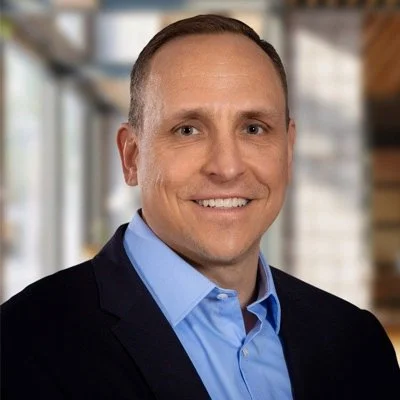
James Sponaugle serves as the Executive Vice President, Chief People Officer at Utz, having served in this role since August 2021. Prior to his role as Chief People Officer, Mr. Sponaugle served as Senior Vice President, Human Resources & Personnel Development at Utz, from February 2020 until August 2021. Prior to joining the Utz companies, from January 2009 until January 2020, Mr. Sponaugle worked at the Stewart Companies family of businesses, a company handling the entire range of construction-related services. Starting with Poole Construction from January 2009 to June 2010, and then moving to Riley Welding and Fabricating, a metal fabrication division of Stewart Companies, a full-service construction-related services company, serving as General Manager and Vice President from June 2010 until March 2018. Mr. Sponaugle was promoted to Executive Vice President and added the responsibility of running Stewart & Tate Construction Industrial Division starting March 2018 through January 2020, while also maintaining his responsibilities at Riley Welding and Fabricating. Mr. Sponaugle started his career with Cintas Corporation in January of 1999, and for close to a decade held various leadership roles in Sales and Operations, finishing his career as a General Manager overseeing a 3-shift operation with approximately 165 associates, including approximately 55 routes and Service Sales Representatives. Cintas is a public company operating nearly 500 facilities in North America — including five manufacturing facilities and eleven distribution centers. Mr. Sponaugle served as the Chairman of the Board of Directors of the YMCA of Hanover from April 2109 until April 2022. Mr. Sponaugle earned his B.S. in Business Management from Cornell University.