
Cultivating Leaders With Una Martone
Leaders must not only know how to manage their team, but most importantly, they must also know how to shape them into future leaders themselves. Joining Tom Dardick is Una Martone, President and CEO of Leadership Harrisburg, who takes a deep dive into the real essence and impact of servant leadership. Sharing her views on how leaders and leadership propagate in a community, Una discusses how to navigate the many challenges of the ever-evolving era of AI and automation. She also emphasizes why relationships are the highest currency every leader must preserve and the undeniable importance of authenticity in today’s fast-paced digital age.
Listen to the podcast here
Cultivating Leaders With Una Martone
In this episode, it’s my pleasure to welcome Una Martone, who’s the Executive Director of Leadership Harrisburg Area. I go back a little bit of a ways with Una. She brought me in when I had the communication gym to help Leadership Harrisburg in a couple of ways quite some time ago. We’ve known each other a little bit on and off and she had me in at a program in 2025 and that was really nice and enjoyed that experience quite a lot.
I’ve always admired Una. Una is the kind of person who is dedicated. To know her is to respect her. I don’t think there’s much more praise that you can give a person than that. You’ll see for yourself how she has an elegance and a seriousness, but a warmth that is a rare combination that I think people really respond to and that’s why she’s been so successful in her role.
We get a chance to talk a little bit about what Leadership Harrisburg does and that model how that model works to help communities and individuals expand their leadership, specifically in the servant leadership area. We get into what the future holds a little bit, start talking a little bit about how AI is changing things, not in depth, but a little bit, so you can see from her perspective. I thought it was a great conversation and without any further ado, let’s welcome Una Martone to the show.
Thank you so much for joining me, Una. I appreciate it. Good to see you.
Good to see you too. Thanks for having me. Happy to be here.
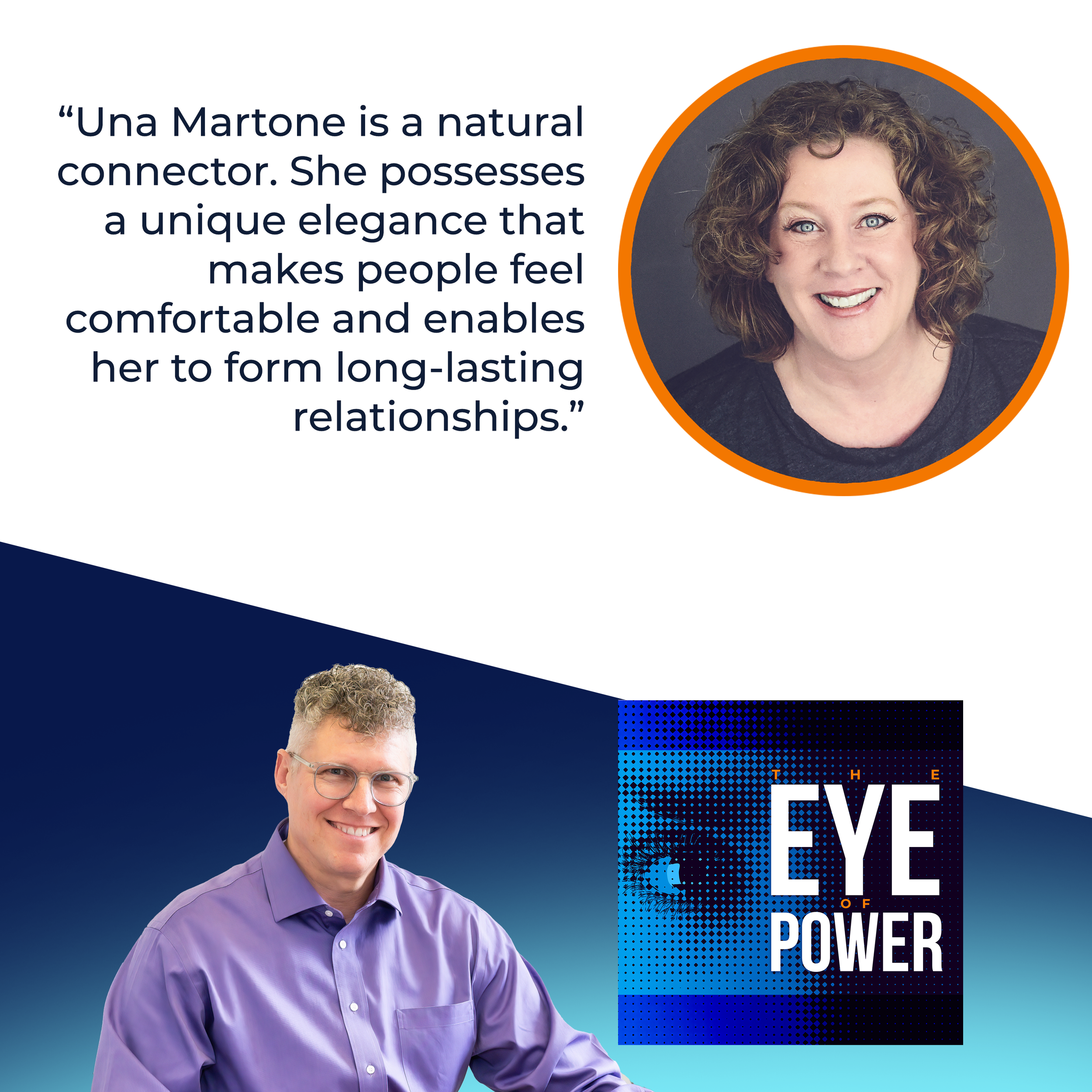
My pleasure. I think what I’m most interested in hearing from you today, Una, is that you’re the person that is just connected to so many people. You’re a natural connector, you have a personal I don’t mean to be flattering, but it’s the truth, I feel you have an elegance around you that makes people feel comfortable. That’s what I’ve always seen. I’ve seen others notice that in you.
As Director of Leadership Harrisburg, you are in a great position to work with current and future leaders. You’ve been doing it long enough where I’m sure some people that you met on their entry into their careers are now blossoming in their career. I just want to see the world a little bit through your eyes as it relates to that, if that’s good with you.
Sure. Thank you. I appreciate the compliment. You almost sounded bashful to make it as flattery, but the flattery has been accepted. I appreciate hearing that. It’s very nice of you to say.
How Una Found And Joined Leadership Harrisburg
That’s an example of what I’m talking about right there. Let’s start with the beginning. How did you come to be Director of Leadership Harrisburg, Una?
When my husband and I moved our family here in 2005, my position was with Harrisburg University. When I arrived at Harrisburg University, it was more of a concept. We didn’t have any students in the door and I was hired as the first-ever director of development for that institution and my job was to raise money for an institution that barely existed. I was really raising money for a concept. While I was working for Harrisburg University, I was invited to join Leadership Harrisburg Area’s community leadership series.
I was new to the area and they offered me a scholarship because Harrisburg University didn’t have money at the time. The president of the university at that time was Mel Schiavelli and he approved me to take the time off of my job. Even though we were in the middle of a capital campaign and it was a hugely pivotal time for the university, they allowed me to take this time in Leadership Harrisburg Area to build connections, to learn about the community and to be an ambassador for Harrisburg University to let people know what it was all about.
Even while I was in the class, I was able to facilitate one of our class sessions at Harrisburg University where my whole class came to Harrisburg University for part of the session and got to learn and understand what the concept was all about. It was towards the end of my class year, I would say maybe it was April or March, by this time it was 2007, and the person who was running Leadership Harrisburg Area at the time announced her retirement.
They announced a search for the next executive director. I was really interested. I had only been here for less than two years and I was sitting in the class but I had been familiar with leadership programs in Greenville, South Carolina, in Orlando, Florida, in Baltimore, Maryland, in all these other places I had lived and I really loved Leadership Harrisburg area. I loved the class. I said, “I’m just going to put my name in for the position.”
I did. I put my name in for the position. I was part of the interview process. In fact, my last day of my Leadership Harrisburg Area session, I left the session at 4:30 in the afternoon to head downtown for an interview with the search committee for Leadership Harrisburg area. I ultimately was selected for the position. I had not told anyone in my class that I was interviewing. I had not told anyone about it outside of my immediate family. When I graduated from Leadership Harrisburg Area in May of 2007, we announced that I was the new executive director of the organization and I started my position in June of 2007, one month after I graduated from the program.
I think that’s right around the time frame that we met and I didn’t realize or if I did, I forgot that you were so new to the organization when you brought me and Dale in, we had the communication gym at the time, to help you with the speed networking. I didn’t put that together that you had been such brand new on that. That’s interesting.
That speed networking that you facilitated, I try to use that whenever I have groups that are just the right size. It’s still a really popular activity that I learned from the two of you which I’m very grateful for.
It is. It’s great. It’s a little bit of structure that helps people be more intentional with their get-to-know-you conversations. We did that for a couple of years. You said you were kept going doing that.
We’ve done the speed networking for several years. It has to be the right size group, as I learned from you. When our groups got too big, it just became unwieldy and you have to have the right space. You know all the logistics around it. When it works, we try to implement it. It’s not necessarily a regular every single year with our classes, but when we do it, it’s very popular.
When you have maybe too many people, then that’s a happy problem.
It truly is. We may have adapted the questions a little bit, so the questions we asked in that group was what legacy do you want to leave to your company, your industry or your community? We let people tailor their answer to that and sometimes there were tears. There were tears when people start talking about their legacy and they talk about what impact they want to have and what influence they’re making even if it’s in their company, even if they have a very small team but they’re impacting those few people around them. Some people would scale up and say, “I really want to create a legacy in this industry.” For them to think about it, make a statement, and then share that statement became really profound and really emotional for a lot of people.
My personal opinion is that a sense of purpose and a sense of meaning is an innate human need and we all want to be seen. We all want to be seen for who we are. When we get that, we feel good. When we don’t get that, we don’t feel good.
It should be so simple.
Shaping A Legacy As A Listener And Observer
The problem is that oftentimes, we’re the ones blocking the view. You were passionate about the program and the concept right from the get-go, it sounds like. You were familiar with it, so you knew the effect of it and the opportunity opened up. It seemed to me, looking from the outside in, that the program has blossomed and done very well and I’d say for no small part because of your passion and your ability to create relationships that are long-lasting with people. What do you think your special sauce is on that, Una? To what do you ascribe your legacy? Let me just add a little caveat to that. How would you answer the question you were just asking people to answer as far as the legacy question?
I’ll answer the first part first. Programmatically and agency-wise, how did we grow and expand and what was my influence on that process. I just tell you that everything that has happened during my tenure at Leadership Harrisburg Area has been rooted in a need that either I’ve observed or our board members have observed or our alumni have brought to our attention or the community has brought to our attention. It has never been my objective or our board’s objective per se to go around starting new programs. That was never my objective.
When people would continue to come to me or to the organization or to a board member with challenges and we kept hearing the same challenge over and over or we kept observing the same challenge over and over and we would say, “We can do something about this. We can address this challenge with the body of alumni at Leadership Harrisburg area, with our specialized expertise, with all of the resources that we have to offer.” This agency has grown based on needs that the community has brought to our attention.
If I was going to tie that into my own personal legacy, I’ll be here 20 years in 2027. If I’m going to say what my legacy has been within that framework of responding to needs, it has been helping the organization to become somewhat entrepreneurial and relevant. The programs that were started that I inherited are timeless. Our community leadership series and our executive leadership series, timeless.
They are critical. They are essential to this community. The things that have been added along the way have really been rooted in need, as I mentioned. I would tie that into my legacy as being a listener, being an observer, and being somewhat entrepreneurial about responding to community needs within the framework of our mission and vision as a nonprofit organization.
Breaking Down The Alumni Circle Enrichment Series (ACES)
I was thinking about responding to needs of the community and being open to putting those resources and putting that towards something that emerges. Can you think of one that is a great example of the thing you’re talking about and maybe the effects of that as a result of that ability to be responsive?
Sure. Just like some specific examples?
Yeah, just 1 or 2 that would exemplify what you’re pointing to.
I’ll say one real very simply is our program called ACES. It stands for the Alumni Circle Enrichment Series. It’s a peer group. It’s a peer group for Leadership Harrisburg Area alumni. How that came about was people were coming to me a lot and wanting to meet for breakfast and wanting to meet for lunch or wanting me to fix them up with a mentor. I’ll tell you my pet peeve is when people say, “Can I pick your brain?” People kept asking me that.
It was more than what I could do as an individual. I thought, “We have an entire community of people who can field these questions. They don’t all have to come to me. This doesn’t have to be my weight to carry personally. Why don’t we put peer groups together?” We started the ACES program in January of 2020, right before the world decided to present us with a global pandemic. We had two ACES sessions in before COVID hit.
We did have to transition to virtual for a couple sessions, but our groups were still able to meet socially distanced even through the pandemic. What came of it, these groups, and I know you know how peer groups work, these people love each other. They came together for professional development and professional coaching and advice, but they found their sense of belonging. They found how much they care about the other person’s success and they truly love each other.
One of the groups that I have now, we’re going into our sixth year. The original group that was founded in 2020, I still have four members of that group who have been together all this time and the program at Leadership Harrisburg Area is on its 16th cohort. I had to bring on a facilitator to help take the cohorts because I couldn’t continue to facilitate all of those people who were interested. The PTS, the problem to solve, was that I was maxed out with requests for my time and my meeting.
Instead of me fielding all these requests, we brought people together and gave them their own peer groups and it has been highly successful. Anyone who’s ever participated in a peer group, we’ve had people who have been promoted, we’ve had people who have left jobs, we’ve had people who have become partners, we have people who have transitioned into new jobs in different industries. The benefits of having a safe space, a trusted group of people to talk about your own professional and sometimes personal situation has been invaluable.
Having a safe space with a trusted group of people is invaluable in dealing with your personal and professional challenges.
Here it is, we’re heading into our sixth year and our 16th cohort is actually starting next month. That’s just an example. I was the one who was most burdened with it and so maybe it was out of max capacity that this program came to be. However it came to be, I was observing a need, I was realizing that one person couldn’t continue to meet this need and we needed a different solution and that’s how the ACES program came to be.
That makes total sense and it sounds to me like they might almost evolve into mastermind type of thing or a support group. Those kinds of things can be very special and powerful for people.
They are. That’s what it is. In some of the other mastermind type programs or some of the other more well-known types of peer groups, they have constructs like you have to have a certain budget in your organization or you have to have been in a management position for this many years or you have to be in the C-suite. Our program doesn’t have any of those constructs. The only construct that our program has is that you have to have graduated from our community leadership series or our executive leadership series.
We put cohorts together where we have nonprofit organizational representatives, we have middle managers, we have partners, we have CEOs, we have people who have been in their professional career for more than 30 years, we have people who are 2 or 3 years into their professional career and they’re together. The dynamic is exceptional. For a high-level manager to be able to hear from somebody who’s just starting in the industry, these are the challenges that I face.
It’s invaluable information for both people and it’s invaluable for the whole group. While it can be similar to mastermind groups in other peer models, it’s without those kinds of constructs and we made it very affordable. We’re not doing it as a money maker, but we’re paying for the costs of doing it and making it affordable to people in our program. It’s just been really well received.
Exploring The Beyond Leadership Program
The Servant As Leader
One of the programs that was in direct response to community need is our servant leadership summit called Beyond Leadership. As an organization, servant leadership was built into our curriculum from 1986. We use The Servant as Leader text by Robert Greenleaf. That had been around in our programs since the beginning. I remember using that text when I was in class in 2006, 2007 and not fully understanding what servant leadership is and not fully relating to Robert Greenleaf’s text.
People would have conversations around servant leadership and there seemed to continue to be confusion. At one point in it was probably 2013 or ‘14, my board chair at that time made a gift to the organization to send me out to a seminar with the Greenleaf Center for Servant Leadership. I had an immersive experience on organizational development in the servant leadership context so that I could learn more about what we’re teaching in servant leadership.
The board at that time also supported me in going to national servant leadership conferences where I heard people from Southwest Airlines and Popeyes chicken and I heard all of these national and international corporate figures talking about servant leadership. I started absorbing and observing and continued learning and continued to build servant leadership into our programs in a bigger way. In 2015, we presented an actual standalone course on servant leadership.
We took it out of being buried in our program where it had only been around Robert Greenleaf’s original essay and we brought it out into the world, so to speak, in a bigger way. We defined some really practical steps to becoming a servant leader and what we developed was called Beyond Leadership. It’s a standalone servant leadership program that can be delivered in a one-day program and then there’s follow-up on that too. That has, I think, almost more than anything has changed not only the face of Leadership Harrisburg Area because we’ve become then known as a resource in servant leadership.
I really think for years since 2015 until now, we’ve shared this curriculum with thousands and thousands of people, tenfold the number of people who come through our nine-month courses. We’ve shared it with thousands and thousands of people locally, statewide, and even beyond the state through virtual capacity. I think we have elevated servant leadership in conversations around corporate culture, in conversations around being a better leader, and we’ve brought servant leadership concepts into companies in a way that they can easily digest.
It all came from this moment in time when people were having conversations around servant leadership but not fully embracing it. By my board chair having a really great idea to say, “Let’s figure this out and let us get a handle on servant leadership so that we can better help other people understand it.” From my seat, it’s been a movement.
It might not seem that way from the outside looking in, but from my seat, I have seen organizations and the community progress from this confusion and cloudiness and maybe even skepticism around servant leadership and the terms to embracing it and incorporating it into their cultures. It’s been a movement which has been pretty dynamic from this seat. I know from the outside looking in, we’re a small organization, but it has felt like a pretty decent movement from this point of view.
Why Servant Leadership Should Be At Odds With Management
That’s amazing. Now, in the journey from being confused about servant leadership to being more internalized or sanguine about it or being able to embrace it, what are maybe some of the three misconceptions or clarifications that you notice people generally have? I’m saying three just so people remember. Not that there might only be three, but what would you say like a top few that you would point to as things for people to learn or to expand upon?
I think the first myth around leadership and specifically servant leadership is that it’s at odds with management. Are you a good manager or you a good leader? Sometimes it’s presented as you’re one or the other. I think the reality is that we have to be both. We have to manage our schedules, we have to manage our workflow, we have to manage carpooling. There are a lot of things we have to manage. If you’re working in a grocery store industry, you have to manage the produce. You have to manage product.
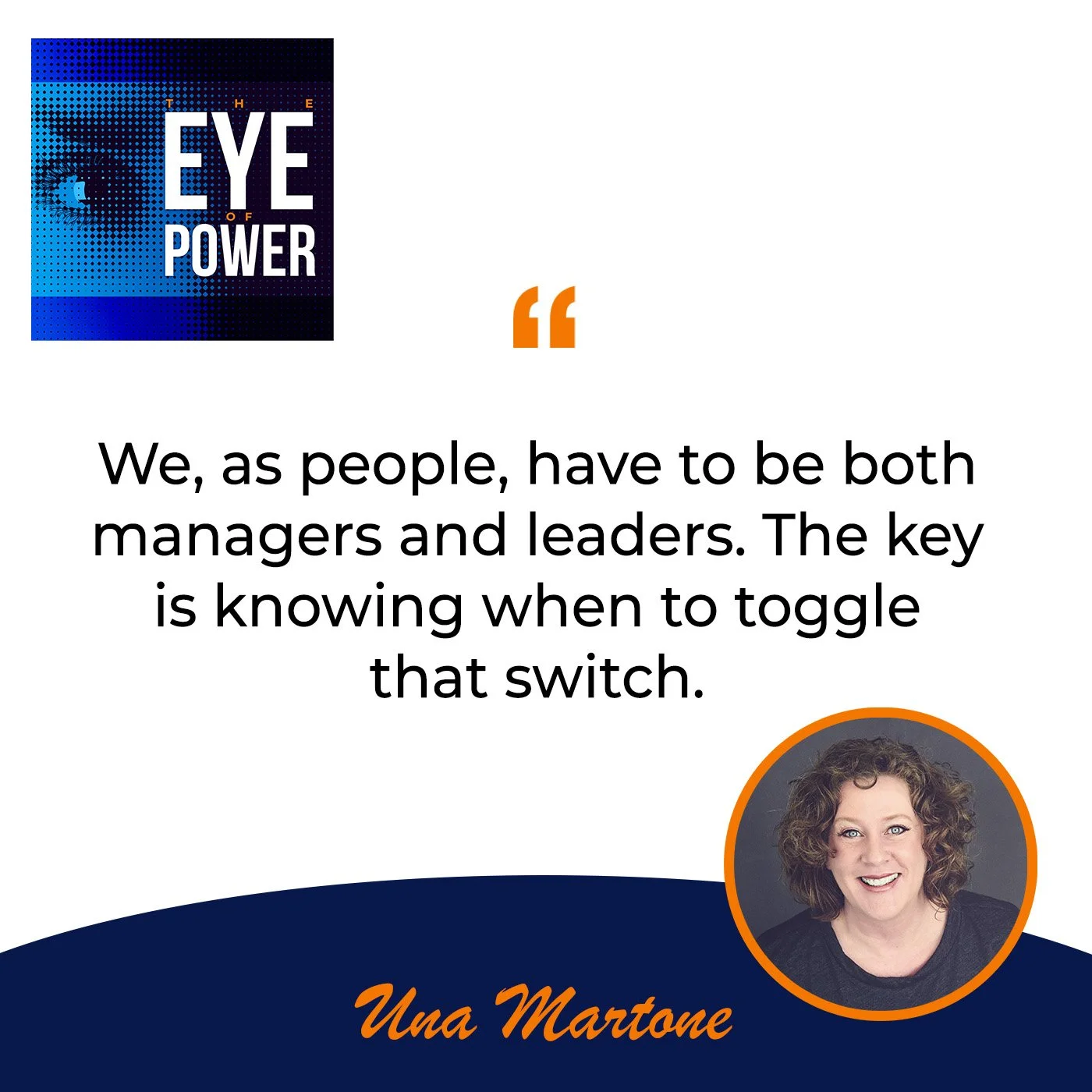
We have to be managers but when we’re working with people, when a person then comes to stand in front of us and we’re not at our computer putting a project outline together, we have to take off our management hat and put on our leadership hat. We as people have to be both managers and leaders. The key is knowing when to toggle that switch and manage the grant application as a project and then talk to people and interact with people in a very human capacity.
I think the first myth about leadership and servant leadership is very basically understanding that management is only and always about things and leadership is only and always about people. Overcoming that misconception where people wanted to say, “I’m not having success managing my team.” We don’t manage people, we lead people. Just coming over that initial definition of what is the difference between management and leadership was the first obstacle we had to overcome in being these cheerleaders and ambassadors for servant leadership.
We start out all of our programs making that definition and we work with people to help them understand management and leadership are not at odds with each other and it’s not a zero-sum game. It’s not one or the other. We have to be both and we have to toggle both. With that understanding, then we have to start addressing, well then how can I become a better leader? When we use the word servant leadership, a lot of time people think it’s soft or flowery or they’re going to be walked over or they’re going to be perceived as a pushover.
We had to overcome a lot of misconceptions about servant leadership that no, it’s being authentic. Servant leadership is, first and foremost, developing more leaders. We develop more leaders by supporting them and inspiring them and most importantly, providing them with the tools that they need to be their best.
Servant leadership is about developing, supporting, and inspiring leaders. They must be provided with the tools they need to perform at their best.
Once we defined some of the ways of helping people become servant leaders, then we have to take that into the real world. How do you really apply this in the real world when people are frustrating and people are aggravating and people aren’t cooperating? That ongoing support is where we come in as an organization. We’re here to help remind leaders that the soft skills are the harder skills.
It’s the self-awareness and the ability to be internally wise, which is the journey. Nobody cares how much you know until they know how much you care. If you’re going to inspire somebody else, you better darn well start by caring about them. If that doesn’t come naturally to you, there’s a little bit of work to be done there.
Yeah. Those mental blocks where people think, “I don’t need any more training. I’m good. I know enough about leadership, I know enough about the community, I know enough about our team, and all those things. Those are real barriers, to have people get past their lack of self-awareness and submit themselves to a learning experience.
I imagine that’s a big part of why the word servant is used because it implies a humility and we need that humility to realize that no matter what you think, no matter how much an expert you think you are, how much experience you have, you still know a small percentage of what there is to know about whatever it is that you’re thinking about. You need that humility to realize we are creatures of limited perceptive power and just realize you need other people to expand your picture at all times.
We’re not going to be around forever. Who are we developing? Who are we bringing along?
That’s thinking long-term then. You’re thinking beyond just the day. You’re thinking about the quarter.
Absolutely. Handing out answers to people and telling people exactly how to do things is not a long-term strategy. Giving people barriers and saying, “This is how it has to be done,” that’s not a long-term strategy. We need people who are going to lead our organizations into the future and so we need to let them lead and know that they might make mistakes and create environments where they don’t have to be fearful that they’ll make a mistake and lose their job or be berated.
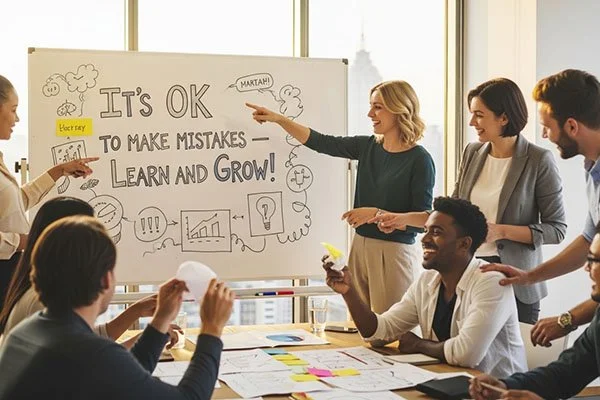
Servant Leadership: Leaders must create environments where people are not afraid to make mistakes.
This is an easy trap to fall in when our currencies are KPIs and everything is this quarter or this year or this week and that we’re transactional or we’re performance-oriented. We feel like we want to help them. “I’m supposed to make 100 phone calls.” “What have you made?” “Eighty.” “Okay, well go make twenty more now.” Whatever it is.
We humans want to reduce everything down to bite-sized and easily managed chunks. We’ll use labels for people, we’ll use labels for things, and whenever we use a label, we got to realize that that’s maybe directionally useful, but it’s not a complete description no matter what the label is about anybody or anything.
That’s a leap from a manager’s mindset that they’re managing the thing and so they have to put those KPIs around it to a leader’s mindset which is what barriers can I remove from your way so that you can go run with this project and make it fantastic? That’s a hard mindset for most people, many people, to break free from.
Go beyond a manager’s mindset and embrace a leader’s mindset to remove barriers hindering your team from producing the best results.
It takes some courage. It takes emotional courage. You have to have you said authentic, so those things that keep us from whatever we’re calling when we say authenticity, the things that keep us from that are generally generated by protective reasons, patterns that we’ve formed. They’re there for a reason and they’re hard to get rid of because it feels risky to deal with them and look at them. It’s not the easiest. When you have a group of people or a program or something like that that gives you permission to come out of those shells, that seems to me like it’s a really good path forward.
I think so. Not only permission but tools and resources to find your way out of that path.
Navigating The Uncertainties Of AI And Automation
You see it modeled. That’s another thing, you see it modeled. You see what’s possible. It seems to me like our world today with the advent of globalization, AI, remote work, automation, robotics is coming fast and furious. We’re going to see really a rate of change that will make even the most experienced and based leader or person dizzy with what to do. We’re in the middle of it now. It’s not like it’s coming. We’re in it now. It’s not going to slow, it’s going to accelerate.
The curve is going to go up pretty quickly. Part of that dynamic is at least what I see. I’m just going to throw this out to you and see what you think. I think the world of work, the currency has been either money currency or transactional. You have this skill, you give me this skill, it’s worth this much time, I give you this money, that’s the 95% of our agreement. We’ve been transactional in our relationships. When you start getting into servant leadership, it starts getting a little bit beyond transactional. It’s more relationship and it’s more whole human approach and it’s more the respect for the human being as an end, not a means.
My feeling is as we get more into this future, we’re going to go less transactional, more experiential. It’s going to be more like this where we work not because of the paycheck but because we want to better ourselves, we want to experience, we like the people we’re with, we like the opportunity of the things we get to do, or whatever it might be. It’s not necessarily so much on the just transactional side where we need somebody to do this, I can do it, you give me the money, I do it and then that’s it. How do you view, whether it be servant leadership or that dynamic that I’m pointing to, what are you seeing in let’s just say 2, 5 years? How does that play out as you look into the future?
I’m scared of this question. I’m scared of this direction because you’re right, we are in the middle of automation and transaction. I feel like I am fighting a transactional mindset every day. I feel like I’m fighting it every day. I hate using the word fighting it because it sounds so violent, but I’m up against it. As a proponent of servant leadership, which is a people-first proposition, I find myself up against a transactional mindset every day and in some of the most surprising places.
People who I thought had a relational mindset and a growth mindset, I have found to be transactional. I resist it, I resist a transactional relationship and I’m looking for ways to get other people on this bandwagon. You’re bringing up a scary direction that I don’t know how Leadership Harrisburg Area will address some of the path in the direction and I don’t know how leaders of companies and businesses and nonprofit organizations will reconcile their people-first proposition with growing automation.
You used the word automation, which is one thing, and then the term AI, which I think the most important word of that is artificial. It’s artificial intelligence, it’s artificial. When we’re trying to be people-first leaders, when we’re trying to develop other leaders, artificial is at the very opposite of being authentic and authenticity is at the root of servant leadership. I don’t have a good answer to your question. I’m in an exploration mode myself personally on my own leadership journey and I’m information gathering and trying to do a little bit of forecasting and trying to have a little bit of foresight in this area.

Servant Leadership: Artificial is the very opposite of being authentic. Authenticity is at the root of servant leadership.
I don’t have an answer. I haven’t met anybody who does, Tom. I’ve had this conversation with phd professors here on the campus of HACC where Leadership Harrisburg Area is located. I’ve had this conversation with young people who are just coming out of college and looking for employment, but so many of their functions are being automated. I have this conversation with leaders in many different industries. We had this conversation with a group from Hershey Entertainment and the Milton Hershey School and some of the Hershey entities. They’re having this conversation and no one has the answers and no one can reconcile how do we remain servant leaders in the framework of what lies ahead?
I found this really interesting with the Milton Hershey folks. Someone brought up a situation where they were actually breaking ground for one of the Milton Hershey properties. It might have been what serves as one of the schools right now, but Milton Hershey was actually building properties during the Great Depression. He was putting all of his money and resources into developing what is now Hershey today and there was a building project. It might have been for the Hotel Hershey, I can’t remember.
Whatever this building project was, the man comes up with a great machine and says, “Here’s what this machine does. It’s breaking up the ground. This’ll do the work of 40 men”. Milton Hershey looked at him and said, “Take it away, bring me the 40 men.” He wanted to employ people during the Great Depression. I love that. I love that about Milton Hershey and I love that about his style of leadership was so people-forward and so people-focused. I’m afraid that the automation and the artificial intelligence that we have today is going to get us farther and farther away from being people-focused and that scares me.
It scares me that we’re an organization teaching some of the things that you mentioned, self-awareness, humility, courage, empathy. These are parts of our servant leadership curriculum when people can write content or filter it through AI and say make this sound more empathetic. AI is manufacturing a human emotion and so the person is getting off the hook.
They don’t have to learn how to become more empathetic. They’re letting AI do it for them. What’s going to happen to our relationships in the future if AI is used more and more as a filter to help people sound humble or sound empathetic when they’re not and they’re not practicing it and they’re not learning it? They’re just faking it. Scary.
That’s a subset of a I call it a trap where our critical thinking skills could atrophy if all we do is give over to ever-increasingly useful AI tools and we just have faith that they’re going to know more than me here, give me this answer and I don’t think it through. My perception on AI has changed quite a bit in the last couple of months, I’ll say, because I’d mentioned earlier that our business has evolved pretty substantially. What we’ve evolved in, Una, would have taken me years, maybe never.
If I could have done all what we’ve done in the last 2 or 3 months, it would have taken me 5 years probably at least to do all of what I’ve done. What we’re planning to provide in the marketplace would not really be possible without AI. In the process of this evolution, I’ve seen how you can both get atrophied by just saying, “Here, you take care of it,” to if you dive into the water and see how answers or how queries are actually processed.
I’ll just say my personal experience is my critical thinking skills have improved massively because I’ve seen ways to derive complicated issues down to something that’s bite-sized and I can see the pathway of how to get there that I wasn’t able to see before. It’s a yin and yang type of thing. It’s a danger and a blessing and there’s going to be examples of great tragedy and danger and there’s going to be examples of great triumph and achievement and that’s just how the world’s going to be. As far as being worried about it, I’d say channel that energy into avoiding the traps and getting on the train where we are actually using greater I’ll call it manifestative power in the in the way that serves humans and doesn’t enslave humans.
I’m glad you found value in the tools you were using and I think like even when we’re working in our programming, we work with schools, K-to-12 education, higher education. We bring school superintendents together, we bring school principals together, we bring teachers and administrators and have these conversations. They’re not certain how to embrace AI as a tool as it is and still teach the critical thinking skills at the same time. They’re struggling with it in our school systems and with our youth. It will be interesting. I’m looking for someone who is coming out as a leader in reconciling our humanity with how we use artificial intelligence. I’m still looking and I just don’t know who has the answers yet.
There’s probably lots of different answers and different stripes. One thing I’ll say that you made me think about there, Una, is people hold on to structure. They hold on to what they know and these emerging realities are going to break structure. One of the things that will need to get more comfortable with is new structures, new ways. I can’t think of a more structured thing than our education system. Our K-through-12 school system is very rigid, very architectural for all kinds of reasons. It’s still very Prussian in its approach.
The whole thing’s obsolete. The more we resist and want to hold on to the old, the more pain we’re going to experience. The more we can embrace the possible new pathways that are open to us, the less pain and the more growth that we’ll see and the more all the things we like as humans. Learning and discovery and feeling close to each other, feeling seen like we’re talking about earlier, all that stuff. I personally am excited because I see more now than I did before some of the things that are emerging and what’s possible.
The picture I had been using was those that are familiar with Star Trek, especially like the Next Generation. There was one episode where they had people from the 20th century were cryogenically frozen and then they brought them reanimated them on the Enterprise. Do you know this episode at all, Una? Anyway, one of the guys was like this Texas oilman guy and he thought, “By now, this is 250 years later, I’m going to be worth trillions of dollars.” It’s like, “Yeah, we don’t use money.”
He’s crestfallen like, “Why does anybody work?” Captain Picard says, “We work to better ourselves.” That image to me, is it going to be like that? Who knows? I don’t know. I’ve always thought that currency, dollar, is not the only currency and that things matter. All that is, it’s a universal expression of value is what that is. If we can expand our vision of what value actually is, then I think we can avoid some of those traps.
Now, we’re going to have those traps. There’s no getting around it. We’re going to have transactional relationships. There’s no getting around that either as long as we’re human. It’s not like we’re going to leave the past completely behind. I think there’s going to be new things that emerge and new possibilities in relationships and structures that emerge that were not possible before. That’s where I take hope from.
I think so. I think it was Seth Godin in his work who has defined relationships as currency. He documented and proved that people will do business with people who they like, where they do feel like that relationship is valued. Even more so with another place where they might save a little bit of money they will put the relationship over the money saving benefits because they want to do business with people who they value, respect, and who value them back and care about them.
I really appreciate his work on defining relationships as the highest currency in our society. Even if you apply that outside of the business world, our relationships with our family, our relationships with our friends, our relationships with our neighbors, these are the currency of society. We’re expecting a big snowstorm this weekend. Do we know what our neighbor’s situation is? Are we checking in to make sure that this person can shovel out or that this person, have they lost power or one thing or another? Those are the things. Those are the structures that I do think we need to hold on to. We need to hold on to our relationships and not let advancements in other areas of technology take away from those human relationships. They still need to be core in everything we do as people.
Learn to hold on to relationships. Do not let advancements in technology take away from your human connections.
You’re not going to be able to marry your Tesla robot.
That’s right. You can’t AI yourself into leadership. At the end of the day, when you’re standing there with a decision to make, you can run it through AI all you want, but you still have to, as the person, deal with the consequences of that decision. Having solid relationships, as Stephen Covey would say, having a super high trust bank account, those things are critical. At the end of the day, no matter what tools or what automations or what artificial intelligence that we’re using, we have to be standing up with our decisions and we are accountable to that leadership and it can’t be faked. It has to be authentic.
That’s a pretty good segue into where we were going a little bit ago about legacy and what you’re looking forward to. We talked about being a little bit afraid of what’s coming here. What are the things that maybe are the flip side of that that you see in the possibility as we wrap our conversation up, Una?
In 2026, Leadership Harrisburg Area is actually celebrating our 40th class of the community leadership series. We have over 1,300 graduates of the community leadership series, which might not seem like a lot, but it’s an annual program. It’s nine months long, so there’s limited capacity in that. There’s 1,300 graduates of that program. Our executive leadership series celebrated 30 years in 2025. There’s about 500 graduates, a little over 500 of that executive leadership series, much smaller program.
Creating Ripple Effects That Shape The Next Generation Of Leaders
In the context of these core fundamental programs, next year in 2027, I’m going to be celebrating 20 years. Half of the lifetime of Leadership Harrisburg Area, I’m here. I’m part of the program and half of the lifetime of the executive leadership series of the community leadership series, I’ve been here. Hundreds of people have been brought into this conversation on how do we make the community a better place. Hundreds of people have been privy to behind-the-scenes activities, conversations with people who are frontline delivering human services, who are walking under bridges. Frontline healthcare workers, frontline educators, elected officials who will stand there and answer questions with our class members.
I’ve been there for twenty years of this. To think of the thousands of people who have been involved in external trainings that we do, the Beyond Leadership program, the Color Code program that we facilitate, board trainings that we facilitate, diversity, equity, and inclusion programs that we have facilitated in partnership with the Martin Luther King Leadership Development Institute, thousands and thousands more people have participated in all of those programs.
I’m not a numbers person, I’m a people person. When you put all these numbers together, it’s incredible. It is incredible to think of the volume of people where Leadership Harrisburg Area, in some way shape or form, has been at the center of their leadership journey and more importantly their community leadership journey. What are they doing now? How are they serving? How are they giving back? Who are they developing as the leader to replace them?
Actually, right now, we’re doing a 40th anniversary alumni survey to find out just those answers and to find out how many hours are our people putting in. I am so excited about discovering the results of this survey because I see it. I see our alumni out there doing amazing things on boards of directors and with nonprofit organizations, I see it, but now we’re going to be able to quantify it. There are going to be some big numbers. What that speaks to me is it’s almost incomprehensible. It’s almost just inconceivable that I’ve been able to spend my life helping other people give back and supporting other people in developing future leaders.
It’s pretty fulfilling, it’s pretty amazing. I can’t believe this has been my job for the last 20 years, which I love so much and I would do it 20 more years if I could. It’s an incredible organization, incredible people are attracted to this organization, incredible people give to this organization so that we collectively can help raise the quality of life for all of the people who live here and all of the organizations who are doing the hard work of serving people in this community every single day. It’s a pretty great organization. It’s been a really fulfilling twenty years and like I said, I’m looking forward to quantifying the work that has happened and continuing. I’m really looking forward to continuing to develop even more servant leaders.
That’s awesome. I think that’s a fantastic way for us to draw our conversation to a close here. That’s perfect. Thank you, Una, I appreciate it.
Thank you.
---
Una, thanks again for being with me. I very much enjoyed our conversation and very much appreciate your viewpoint on things. It’s funny as I was asking some of the questions I asked, I was noticing how much you really walk the walk of the servant leader where you’re reluctant to talk about you, you don’t want to make it about you. It’s always about either the mission or other people and that’s a wonderful quality.
It’s a little bit of a balance we all have to find. It’s because we all count too. It’s your life, you’re the author of it. You’re the person that gets to decide what matters and what doesn’t and in the both in the moment and long-term and you can make decisions and use your agency to change the path. Does that mean you have control over things? No, it doesn’t. The world is much bigger than any one of us.
That being said, we do have a lot of agency and an example like Una where she’s been able to be the director of an organization that has connected literally thousands of people, of leaders that therefore what they learn and grow and in then how their relationships come together ripple out and affect really an entire community. There’s really no way to quantify what that is, but it’s substantial, let’s put it that way. Thank you, Una, for being my guest and thank you for reading our conversation. I appreciate it.
Important Link
About Una Martone

Una Martone has articulated that her purpose in life is “to help people see their best so that they can be their best!” She considers herself fortunate to fulfill this purpose through Leadership Harrisburg Area where she has served as President & CEO since 2007.
Highlights of Una’s tenure with LHA include the creation of Beyond Leadership, a curriculum on servant leadership that she conceived, created, and has delivered to thousands of people since 2015. Una is also responsible for the addition of the Alumni Circle Enrichment Series, Board Strong, The Color Code, and an original Diversity, Equity & Inclusion training program that has reached over 8,000 people since 2020. Una created the first and only community-wide volunteer fair which has been executed by five consecutive CLS classes serving more than 250 non profit organizations (unduplicated).
All told, LHA’s profile has increased under Una’s leadership – a measured 500% increase with an outreach of over 5000 people each year. Una’s love of curriculum development is accompanied by a focus on community partnerships, fund & resource development, and the creation of strategic alliances. Una’s efforts have increased the organization’s budget which prompted moving to a larger facility, adding team members, and acquiring a company vehicle (branded) which, in turn, have significantly increased the organization’s ability to address community needs.
Una’s work has been recognized throughout Central Pennsylvania and beyond. She has received numerous awards and distinctions including 2009 Robert D. Hanson Award for Excellence; 2012 Women of Excellence (TWE); 2018 Business Woman of the Year; 2018 Luminary Award; 2020 Women of Influence Circle of Excellence; 2021 Outstanding Service Award; and 2023 Facilitator of the Year Award. Most recently, Girl Scouts in the Heart of PA recognized Una with the 2025 Woman of Distinction Award.