
Curiosity Over Judgment: How Authentic Connection Transforms Leadership And Life With Esther Angell
What if the secret to better relationships, stronger teams, and more confident kids was as simple as If you want a friend, be a friend?
In this Eye of Power conversation, Tom sits down with go-to-market strategist and leadership mentor Esther Angell to explore how curiosity over judgment changes everything—at home, at work, and in the way we build our careers.
Esther shares wisdom passed down from her Queens-born mother and her unforgettable Aunt Lynn (Live Like Lynn), who made everyone around her feel seen, valued, and loved. From coaching her kids to ask great questions, to helping anxious young people step out of their own heads, she shows how genuine interest in others becomes a superpower in a lonely, distracted world.
You’ll hear Esther’s unusual journey:
● Growing up in rural Oklahoma with global experiences and missionary travel
● Working in a faith-based nonprofit with people in deep poverty—and what scarcity really does to the brain
● Surviving the boom-and-bust cycles of upstream oil and gas and the camaraderie that shared suffering creates
● Becoming a leader in manufacturing and software, building psychologically safe teams, and learning not to manage everyone like yourself
● Developing high emotional intelligence (EQ)—staying grounded, processing emotion, and not taking things personally
Now, as a consultant, Esther helps organizations clarify their go-to-market strategy, align marketing, sales, product, and customer success, and actually use the tech stacks and tools they already pay for. She’s especially passionate about supporting new managers as they discover who they are as leaders, and about creating positive influence in the immediate sphere around you instead of chasing abstract status.
If you care about leadership, mentoring, curiosity, authenticity, or raising grounded kids in an anxious age, this episode will give you both inspiration and practical lenses you can use right away—on your team, in your family, and in the way you show up in the world.
---
Listen to the podcast here
Curiosity Over Judgment: How Authentic Connection Transforms Leadership And Life With Esther Angell
In the show, it is my great pleasure to welcome Esther Angell. We met because she was the moderator on a panel that I was on a couple of weeks ago. She did such a great job that I was like, “I got to get her on.” She really knows what she is doing. It is a great story, a great personality, and she had good insights when we were talking on stage. I was like, “Man, this is somebody who I think we can really have a great conversation with.”
Guess what? I was not wrong. Our conversation gets into Esther's story and how she got to be in the wonderful place she is now, which is that she has gone through corporate America, been a leader, and been in a lot of different kinds of situations. Now she helps organizations tell their story and reach their people. You will see, she is quite talented at what she does. Without any further ado, let us welcome Esther Angel to the show.
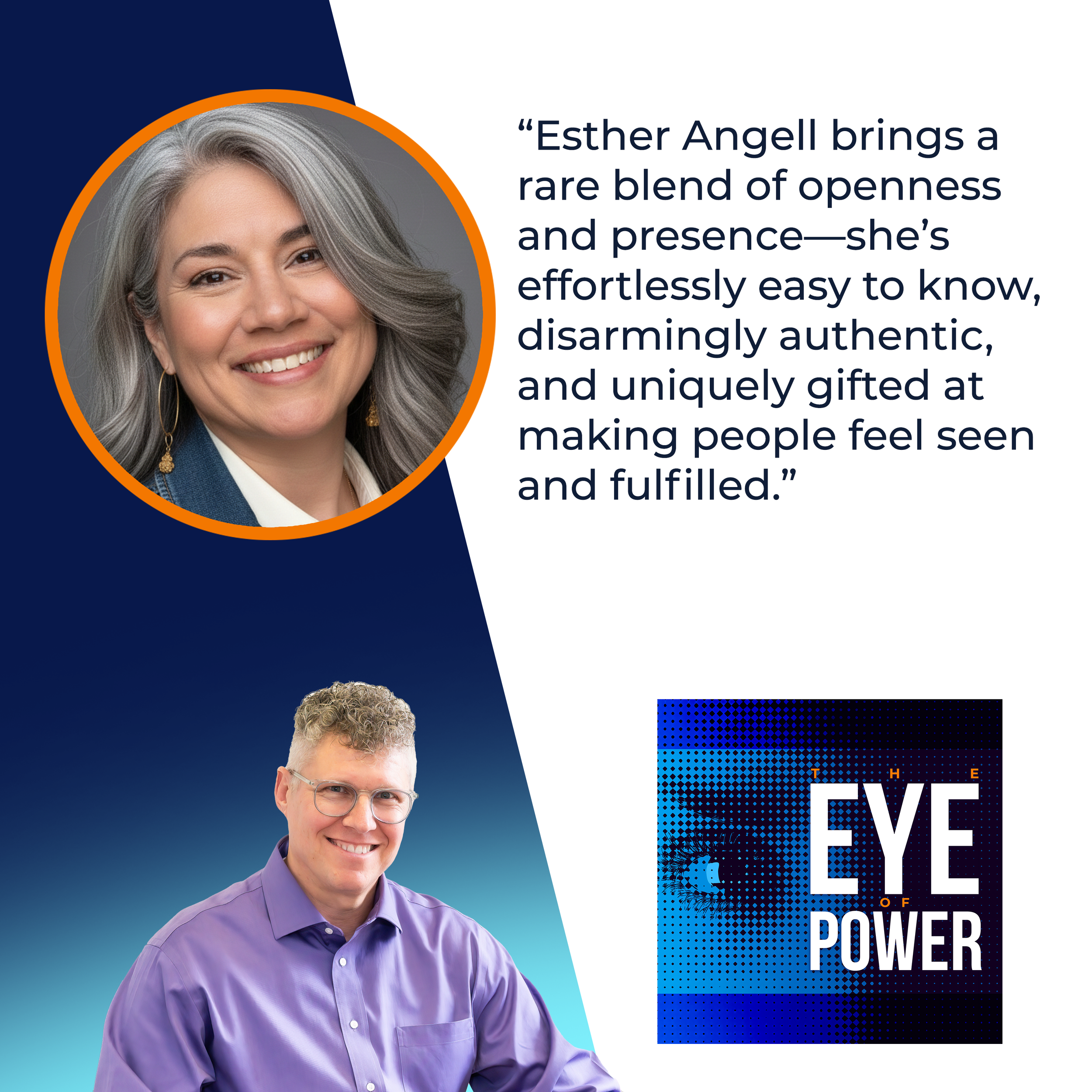
Building Authentic Connections Through Curiosity
Esther, you were talking about some advice from your mother.
She gives the greatest advice. I would love to tell stories about her. She gave this advice. “If you want a friend, you have to be a friend.” My parents would also tell me because they had done a lot of counseling. They are both teachers. People love to talk about themselves. A great way that I have coached my kids is to ask questions about someone else. It has really helped my kids get a little more confidence, I feel like, in social settings.
I watched my daughter, who was twelve at the time, chat up a college student, but she was just asking her questions about college. What do you like about college? What are you studying in college? What is it like to live in the dorms? What are your friends like? What activities do you do? When you start asking people about themselves, people love it. What did they walk away from? “She is so mature,” not really.
The person is thinking, “This is a little person here, not a little kid.”
Also, it is important to show genuine interest. When I think about even some philosophies of my life is around curiosity. It is really coming with, “I am curious, I am not judgmental.” That authenticity of just listening and letting you be in the mode that you are in. It does not mean I do not challenge you, I can do that again, with curiosity as opposed to judging you, like, “You are wrong. Why am I thinking that?” My first instinct might be to say, “That is a dumb idea.” I can ask the question, like, “How do you handle this part of that experience?”
If you want a friend, you have to be a friend.
They are like, “Is there a different way to do that?” Tell stories. The other element of it is storytelling. My mom was really good about helping us think through how you make friends. She always had friends. She literally was told one time in college, a guy came up to her and said, “I do not like you.” She is like, “What? Everybody likes me.” He goes, “You are too nice.” She also advised that at some point, you have to realize you cannot make everyone happy, and you are not going to be friends with everyone. That is really okay.
It is funny. I am laughing because do you know the movie, Uncle Buck?
Yes.
For those who do not know the movie, it is John Candy and a young Macaulay Culkin. He is like ten years old at the time, around the time of Home Alone and all that. He is his ne'er-do-well uncle, who has to take care of the kids in an emergency. The parents are mortified that they have to trust this guy with their kids. When he comes in, it is like this rapid-fire question thing of the little kids. That is what I am picturing.
I love it. That is a great scene. My other favorite scene was when he drilled through the door. My dad, who is a very huge personality, is like, “That is right. That is how you do it.” I am like, “Okay, Dad.”
We are talking about your mom a little bit. Let us get into your origin story. I just want to start with the fact that the reason I invited you on, I knew we were going to have a great conversation because I was super impressed when we were doing the panel together, how you were really able to be number one, 100% present. Number two, able to weave in. You really set the stage.
One of the remarkable things about our panel experience was that it seemed like everybody was building off what other people said. Everyone was listening. Too often, panelists get up there, and they are just going to talk about what they are going to talk about, regardless of what else is going on contextually. You really set the tone, and one of the reasons why we got to that synergistic conversation that everybody in the room really appreciated.
That told me you have a good amount of skill with listening, like we were just talking about. If you want a friend, be a friend. It is related to seeing people and being present. Just really wanting to know, that curiosity that we’re talking about, and when I am in situations, and people ask, “How do you know all these people already?” It is like, “I was actually wanting to know them. That is the secret.”
I'm going to say that.
I want to take the question behind all that, Esther, were you born this way? Did you get this way? Your journey? That's how you got to the place you are now.
Curiosity Shaped By Diverse Experiences
That whole nurture versus nature. There is a whole lot that goes into both parts of it. My background is pretty unique. I grew up in rural Oklahoma. My parents actually moved back to the house that I grew up in. We will go and visit them about once a year in six acres. It was farmland everywhere. Now there is a bunch of rigs because they are drilling.
Did you watch Landman?
I have watched Landman, and we think it is hilarious. It is very vulgar. You do not want you and the kids around. It is exaggerated, but there is a lot of truth in a lot of those elements. I grew up in a rural place, and some people might have a connotation of what that experience would be like. I have literally had people tell me, “You do not sound like you are from Oklahoma.”
What is that supposed to sound like? I do not know what I am supposed to sound like. My mom was not from Oklahoma. My mom was from Queens, New York. She grew up in Elmhurst. My parents met on a blind date in the late ‘60s. They had this wild, crazy dating experience. The second date was picking up a boat in Canada. The third day was in Scotland because my dad was on a submarine and he was going to be stationed there, and she happened to be there.
That is going to press the heck out of your mom.
It was so funny. The stories that they have told on this. By the time you are a kid, they have settled down, and they are not living the same way. It seems like a fairy tale. I had these experiences, and my parents, while I grew up in the same place, they still in that property. We had these crazy adventure experiences. My parents were very religious, raised in a Christian home, and they had friends who were missionaries.
We had missionary friends from Africa, we had missionary friends from Denmark, and we had missionary friends from South America. We went on the first mission trip I went on. My dad packed us up with a friend of his, and we went down to visit churches in Mexico, in the mountains of Mexico. I was seven years old. I was the oldest of four.
You are the oldest of four, too.
Really? Okay. Say, “Eldest.” My husband is the oldest of four, too. Pros and cons. You have these experiences, and it just frames up a different worldview. My worldview started at a very young age, not being one way. The world is not just one way. There are lots of people coming from lots of backgrounds who look different, talk differently, and they are just different.
That it set up for me being okay with that and being genuinely curious about how people are showing up. Over time, probably there is some anchored in curiosity there, but a lot of it is having those experiences and then genuinely wondering, “How do people show up and why are they the way they are?” I worked in a faith-based organization for a while. It really taught me that so many times, people are products of their environments.
There is so much that is a product of the environment, and the decisions that they make are a product of that environment. It balances with who they are, like genetically who you are. When it comes to curiosity, how did I get this way? It is a bit of both. My parents, I could say, yes, my parents are smart. They are well educated. They know lots of people. They are really friendly. My dad, despite being this massive, huge, crazy personality, A-type personality, is still, people like to meet him.
He is such a nice, genuine person. He genuinely cares, genuinely wants to see people helped and successful. My mom was a professor for years. Genetically, there is probably a predisposition to that curiosity mindset. A lot of it is just having those experiences and then being open. I have noticed it seems I have mentored some people who are so internally focused. You are so focused on me and how my life is going, my experiences, that it closes you off from the world.
Motivation For Empathy & Connection
That is the place where a lot of our pathologies, our mental pathologies, are born in that introspection place. We do not know everything. We look at these things, and then anxieties take over, and they multiply. It becomes this self-perpetuating circle where we are focused on ourselves, wonder more about other people, and the rifts grow, and problems emerge, and it does not lead in a good direction.
No, no, it does not lead in a good direction. As you were saying that, a lot of times we assume that everyone is thinking through it the way that I would think through it. Everyone is, “They are thinking about me the way I think about me.” Nobody thinks about you the way you think about you.
Nobody thinks about you the way you think about yourself.
They do not think about you that much.
A hundred percent. I try to tell them that this is a really hard thing for my kids because I think about myself all the time. It is hard to get out of that mindset and the neurosis that comes with it eventually, when you are by yourself, lying in bed, because we have all been there. We are lying in bed, and our brains are trying to process, which I am not crazy, but my brain is trying to process all the things that happened that day and the mistakes that I made.
That I think is evolutionarily. If you survived into the night, then you had to analyze what happened that day so that you could survive the next day. That is like thousands of years ingrained in us. It is not going to go away because now I am safe. I am safe. I do not worry about a bear coming to eat me. We have the neurosis in the way our bodies and our minds work.
The question becomes, how do you talk yourself out of that? That is like a little bit of self-coaching that can be healthy for us to do. For young people, if you have not had that process, talking to someone who has gone through that process to help you through that process is good. I am a firm believer in making the connection, especially in mentoring-type connections.
Some elements are the words I use often that are emergent, where, once you have taken care of the necessities of life, food, shelter, family relationships, and close circle type relationships. We are not done there. Once we feel like we have got those boxes checked and are going, we are usually not done. We keep moving outward, ultimately towards what we want to feel significant. We want people to see us for the person we actually are. The thing that tends to keep that from happening is ourselves, in a way.
One of the things I really admire about you, Esther, is that you are very pronounced. You are letting it all hang out. You are not really inhibited, at least in the way that we have interacted so far. I feel like you are easy to know, you are easy to go in any direction. That helps that feeling of being seen. You are helping people, and that leads to a feeling of being fulfilled. I am saying all that because I want to get into your professional path a little bit and how it came to be that we came in the same circle.
Some of the stuff that you said was really interesting, is, I will say it is purposeful, some of it is very purposeful for me, and some of it, as it happens. Something very purposeful for me is that I had a relative I was very close to my aunt, and she could be in the room with anyone. She did it for my kids, and she would do it for famous astronauts. She knew a lot of very influential people, and everyone felt special in her presence.
She passed away entirely too young from cancer. After that moment, I felt that there was something missing in the world from her because she was such an exceptional human. I am going to get emotional. An exceptional human, taken too soon from us. And she made you feel special if you were with her. It is something that I wanted to take that mantle on as best I could in my way to make the people around me feel seen and heard and loved.
That is quite an inspiration.
It was very inspirational. Her name was Lynn. I call it live like Lynn. I want people to live like Lynn. I want to live like Lynn. She grabbed the bull by the horns and kicked it a few times. No one loved a dirty joke as much as Auntie Lynn. She was a hoot and a half. Her sons literally had code words that she was going off the rails to the point of like, “You need to stop, mom.” It was a muskrat, like a muskrat.
I use that reference a lot. For those who do not remember or do not know, that is Meet the Parents.
She was this really interesting human. There are points in my life where I have shifted and said, “It is not just about me or growing my career. What do I give back? How do I show up? How do I make other people feel special?” My purpose as a human, why I want to be on this earth, is to create a positive influence in the sphere that surrounds me. I do not necessarily like getting famous. There are a lot of people who know lots of people.
I may not ever be there, but what I can do is my neighbors, do I take care of them. We have a one-year-old neighbor across the street. I will bring him dinner sometimes. I will make sure the other neighbor with the little kids, “Can my daughter go over and watch her kids for a minute?” Yes, I use my children for babysitting, but whatever.
Accountability & Communication Insights
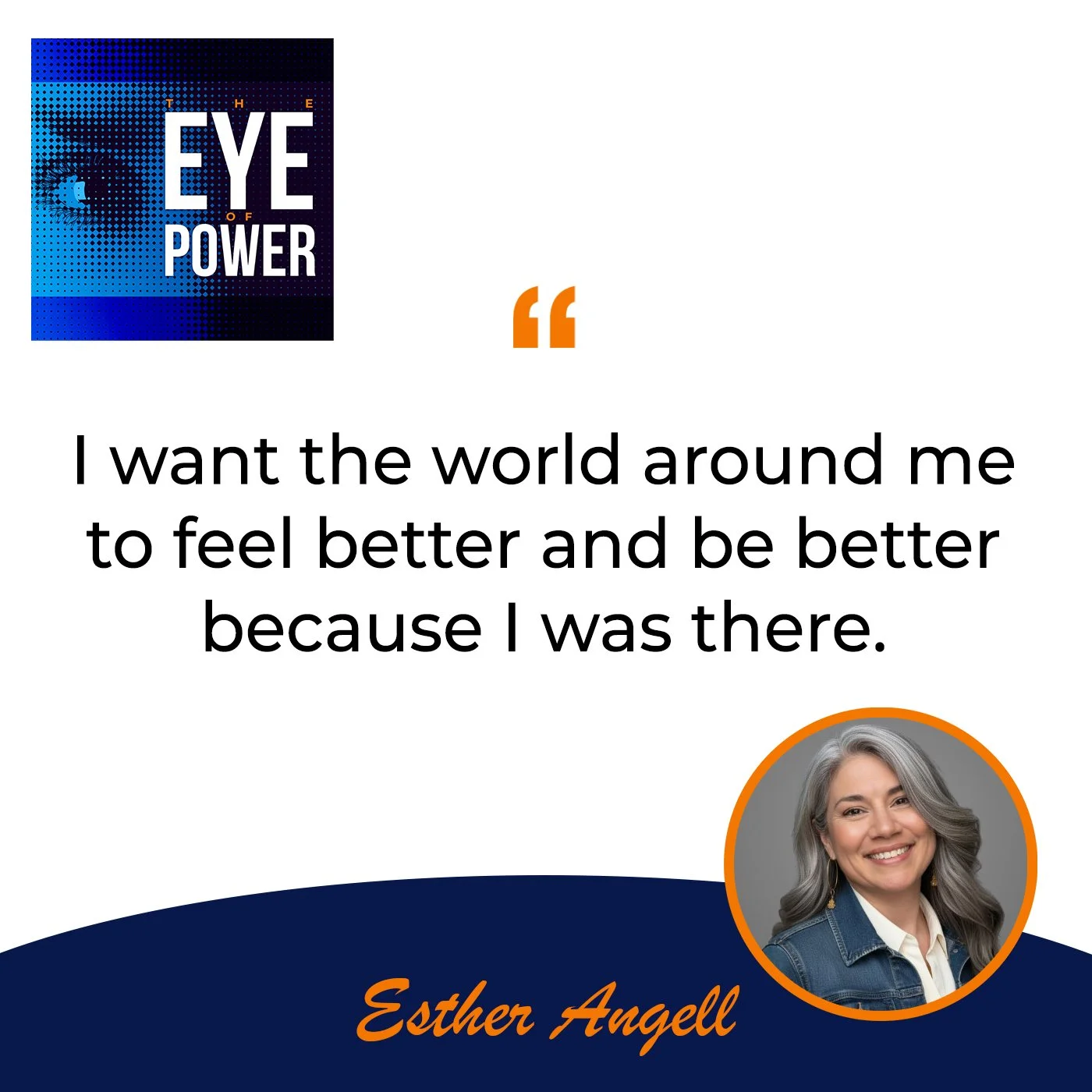
I want those people to know that their presence in my life matters. I want the world around me to feel better and to be better because I was there. If more of us took that philosophy, I would not need to change the world. I need to change my world. All we are trying to do is change my role to be better. Sometimes you have to let people exist or hold them accountable for bad decisions.
I have told people like, “Just keep your mouth shut. If you would just start keeping your mouth shut.” Somebody who got let go because of something that they said, and they reflect on it as well. Like, “Why can't I do this?” I am like, “We can talk about that.” Yes, there are consequences for what you say, “I love you. You are wonderful. Let us keep on moving.” Sometimes it is held accountable. That does not mean you do not hold people accountable or do not have hard conversations, but I want to make the world around me a better place.
The hard conversations are required if you have actual love for the person.
Frankly, even care. If you care about someone, you are willing to have hard conversations. Most women will appreciate this. If she got toilet paper on her shoe, you were telling her, like in general, women have this camaraderie to do that. They do it in a very different way than men do, which I found fascinating in my career and in my life. We have to take care of each other. There is no reason not to. Why would you not take care of someone?
That would start with, do the men notice that there is toilet paper?
They will not, but they will hold each other accountable in different types of ways. Women can also be really mean, especially middle school girls. We all know that story, Mean Girls.
That is the biggest locus of evil, I would say. Thirteen-year-old girl groups.
If you talk to little girls, they are not trying to destroy someone's life, but they are trying to survive.
It is not a character flaw. It is the way that we are built.
What is interesting is that I have seen men have difficult conversations with one another to hold each other accountable on certain things. Like, “Dude, you cannot say stuff like that.” Where women would not say those words in that way, they will approach it a different way. There is a book called Same Words, Different Language. The author talks about that.
We are using the same words, but they have different meanings. The word maybe can mean a lot of different things to a lot of different people. Overarchingly, we should be looking for ways that we can bring a positive influence. Now you did ask about my professional experience. As a professional, I started in the nonprofit realm, and I was working with a lot of people in poverty. Again, that framed my point of view on why people make decisions, how they make decisions, and the assumptions that we might have about someone.
When I left there, I went to work for the for-profit industry in the oil and gas industry. Something that fascinated me was the suffering that you go through. If anyone has been in upstream oil and gas, you know this. It is so cyclical. You are either moving so fast you cannot keep up, or it is crashing so hard your friends are being laid off. You survive, and you suffer. When you build that, you build this camaraderie in this network and this sense of belonging that is really meaningful. All those things framed, really did frame my existence and how I show up at work.
Can I pause right there because a couple of things I want to explore? Working with people in poverty. What were your observations, or takeaways, that if you had that magic wand that you could just take from your head and put in theirs that would help them in whatever help means to you? What would you say to that?
Understanding Poverty's Impact On Mind
Just to frame it up, we grew up very weak. I never worried about food on our table, but I never had a new pair of shoes. That is how I grew up. We grew up, and my dad was a teacher. My mom was a stay-at-home mom with four kids. I experienced the want. I never experienced the desperation of, “I do not know where my next meal is coming from.” When people say, “I grew up poor.” My question is, “Did you have to worry about whether you were going to eat that day and how you were going to eat?”
If so, if you did not have to worry, you would not really poor.
If you did not have to worry, I appreciate the hardship and the want that was there. It is a different level of insecurity, not knowing where food is coming from.
Now we are talking about existential.
This is something that frames you, and it is decades. A couple of things that I would put through is someone who is coming from that. First of all, you do not understand it. Do not assume that everyone's experienced like, “There are lots of opportunities out there.” Do not assume your experience and the way that you have experienced life is the same way someone else has. There are ways that we judge. There might be an opportunity, but I would never see it.
Don’t assume your experience—and the way you’ve lived it—is the same as someone else’s.
Be empathetic to people's journey on how they got there. There was a researcher who actually studied sugarcane farmers, and they receive almost all of their revenue at one point in time when they sell their crop. They measured the IQ of these farmers right after they had sold the crop, and they had plenty of money, and their IQ right before they were able to harvest the crop. It was a substantial drop, I think twelve points. It was very substantial. There were several points.
It is funny you mentioned sugarcane because that is a particularly difficult crop to deal with, it is dangerous to at least used to be, I do not know what it is now.
Yes, and I would have to find the research. I could be misquoting it. It was a distress to the point where he is like, “Your lack of resources affects your IQ, because you are spending your time, energy, and mind space in trying to figure out how to survive.” If I could pass anything out to anyone, is just do not make that assumption. Be careful of the assumption that you are making about someone who is living in poverty and with their capacity. They are just trying to survive. That is you, if you have never lived, trying to figure out where your next meals come from, and I have not. You cannot truly understand what that space is.
It is almost like they have a veil that is imposed by just protecting the core in a way.
I know people who have adopted children. They would hoard food. There are behaviors you will see, food hoarding being one of them. There is a great author, comedian named Zarna Garg. I would totally recommend her book. She is an immigrant from India. First of all, she is flipping hilarious. She lived on the streets of Mumbai as a child, from 14, 15, for a couple of years. She reflected on when she came into success, when she had money, the same behaviors were still there because that had been so ingrained in her.
Even her family did not understand because they did not understand the suffering that she was going through. She hid what was happening. They did not understand it. To them, it did not happen. If you do not understand that, why are you doing this? Why are you hoarding that? Why are you behaving that way? It is the person, it is the family member who takes the sugar packets home.
On the contrary, I swear to God, my grandfather passed away when I was young. I was like seven years old when he passed away. He would put sugar on a Froot Loops, because he went through a depression, and sugar was not a thing. His grandchildren were going to have as much as they could possibly shove into their little bellies.
The depression really shaped the generation, and we are still seeing the effects of it to this day.
We are also seeing that this is also something I am trying to understand, and I encourage other people to understand what COVID did to young people.
That is another good point.
There are social interactions. We see why it is that we have so much anxiety. It’s because people had to spend a year and a half not figuring out that these are formative years where you learn how to interact with people. I know my kids are affected by it. They missed out on building those networks and those people skills, a year and a half of building their people skills. When you are like, “I am in my 40s. A year and a half missed is nothing. It is a small fraction.” If you are 10, that is 10% of your life. Almost 20% of your life was spent without building social networks properly.
Career Transitions & Industry Insights
That is a great way to think about it. I want to return to another thing because when you went to the oil and gas business experience, you said it was a rollercoaster. What psychological did you observe in fellows in that business because of that rollercoaster takeaways do you see from those conditions?
It is similar. Any suffering in a group creates camaraderie. This is why the military puts you through boot camp. You suffer together, and there will always be. I am still good friends with people that I worked with. I can still call, reach out. If people know that you came from there, like, “You get it.” It is an understanding, it is like a mutual understanding that we have of each other, of what you go through.
Encyclical, there are lots of industries that are encyclical in nature, but the upstream oil and gas industry would say it is so dramatic. Also, at that time, do not take things personally. During that time, there was a downturn, and I had to lay off a friend of mine who was on my team. She still ended up being one of the backups for when my kid was born. She was one of the backups to pick my son up from daycare if necessary.
Those things were not personal. There is just the industry. It is just how it goes. Kevin Hart, I am listening to his book, and he talks about shrugging it off. The ability that he developed to shrug it off, you develop that in the upstream oil. Look at how he shrugs it off. All right. This is how it is. Go on. You do not stop. You cannot stop. “Is it all for me?” Yes. Poor you. You got laid off for more than a day. Let us go.
This dynamic is one of the more interesting, going back to Landman. I happened to be over at my parents' last night. We watched Landman together. They do not clean up. My mom and I watched it together again last night for the first episode of the second season. Spoiler alert. If you have not seen it and you are going to see it, stop right now.
Let us skip a minute or two. They were in the boom thing where the son had put everything on the line to try to make it, and that opens up where they actually did hit. He was trying to tell his wife what that meant for them. It is like the numbers were just staggering. You get the is. Now it is a TV show. You know the dream is not going to stay the dream.
There are going to be all these things that come in. The roller coaster is going to go back down the hill, too. Just because you are an instant millionaire and it was not instant. Just because you hit it big there does not mean you stay that way. Anyway, let us riff off of that and go from there on to where you are now, Esther.
I worked in oil and gas, and I moved into manufacturing. I was still in upstream oil and gas and was in a manufac, worked for a manufacturing company in Houston. I really enjoyed it, learned so much. I will say that was one of the foundational learning, like what I learned about who I am. One of the first times I managed a larger team learned how to be a good manager. There are so many learnings you take from that.
Do not manage yourself. My dad would say sometimes, I remember him telling me that somebody has to be the elbow. By that, he meant, there are, of all the things that it takes for an organization to function, for a body to function, something there is boring parts to. There is an elbow. Like, “That is not exciting. No one is excited about that you need it, but no one is excited about it.”
That is completely okay for people to operate in an organization. They just want to have the same job and do that job well. I wanted to grow and learn and move. It is not that they did not want to grow. It is not that they did not want to learn. They wanted to be really good at their jobs. They wanted to do that job and no other jobs because they were good at it. It facilitated their lives. I could not understand that when I first started.
That was one of the key things that I learned was not everybody is going to look, think, talk, or have the same objectives as you. That is okay, you need it, because I would come in both barrels blazing. It really shook things up. Eventually, I learned, and then they learned how to communicate with me. I learned how to communicate with them and listen better, and meet them where they needed to be met, not where I wanted them to be met.
Sometimes I would have someone, and I would be like, “You are amazing. You could do all these things.” They are like, “Yeah, but I do not want to.” That is okay. I had to learn that. I learned how to deal with not-so-great interactions with customers and colleagues. It was just all this learning. I had some really great mentors there that I stay in touch with to this day, who helped coach me.
I tell everybody I have ever worked for since then. “Victor, I will send this to you.” You can listen to it, and this is your shout-out. Victor Jackson. He would say, “Come to his office, I would be all worked up about something.” He would just look at me like, and say, “Wax on, wax off.” Ever since then, I have told people.
Emotional Intelligence Development Journey
I have a lot of intensity, and when I get into something, I am going to make it happen. If it does not go my way or something happens that I do not like, I might need to calm down. I learned about that to learn this about myself, but I did not mean I have to be that way. It meant that I had to recognize it and then find a place to calm down. I would go to his office and be like, “Victor, I just need to calm down for a minute.”
Part of that, what I was taking is, did he mean a return to fundamentals or what?
It was a return to fundamentals, but just calm down. It is going to be okay. Process, do not let it get to you. We are going through the process. Let it take its time. Slow down the process. That is really what he was working on. It was not just the fundamentals. This is a reference to the Karate Kid. He is training him how to move. You are training how to move. As a person who is always on the go, I will try to rush through that movement, which is what the Karate Kid is trying to do.
Rush through the training. Just tell me how to do the thing. When he says, “Calm down, learn the motion.” It does not mean that I did not get worked up about it. I had to “Calm down, pause, reflect, and think.” I learned that, and it created this capacity for me to calm down. When I would get worked up about something, it is so funny, he is bringing back memories.
I will never forget going to his office and eating his little oranges. I would sit down. This thing happened. This person is driving me crazy. The situation is on. He would just smile. He just waits. Just open his orange. “Dan, you want to talk about it?” “Yes, I do. I want to talk about it calmly.” We would process. It was a lot of processing.
It was getting you to that technique of processing when something is really worked up, when you do not like something that is going through. That empowered me over time when things do not go like, “I might have my venting session, but I am not going to have my venting session in the moment.” That venting, that pause, calm. Let us just calm down. Let us walk through. Talk to me about what is going on. There have been situations where people have been extremely unprofessional in a meeting.
I diffused it. It was directed at me. I was able to diffuse it to the point where other people in that meeting were like, “I wanted to say something to defend you, but you were calming it down, and I know I would have made it worse.” Having that expertise is really one of the huge advantages. Having those mentors is something that I learned so much about.
That to me is high EQ, high emotional intelligence, where you can recognize in the moment and adjust in the moment. That is a superpower. The nice thing about that is you can develop it. That is a great example of how you are able to develop. Sometimes there are things that we are given, and what we are given is what it is.
In this dimension, we can really pay attention and actually make some pretty good progress, so that it makes a difference. That is a great example where, okay, there is an upsetting thing, or somebody does something that is objectively objectionable, and then do we spiral or do we just stay put and let it go, and that is what Don Miguel Ruiz in The Four Agreements calls imperturbability. Anybody can do anything, and it does not throw you off center.
A lot of folks want to. There is this idea that I have to control the situation, and you do not have to control it. You cannot control it. I can only control how I respond to it. I have told my kids, and I have told other people, that it is being anchored. By that, I mean grounded. By that, do you know where you stand? Forget where everybody else is. Do you know where you are? When I think about it visually, do I feel my feet on the grass? Do I feel my feet and the earth supporting me grounded, I am here. The wind and the world may whip around me, but I am here, and I am okay with who I am. I stand as me and just who I am. This was something that took me time.
You don’t have to control the situation. You can’t control it — you can only control how you respond to it.
One question before we leave, because you were specifically around your kids, you gave what it looks like to me as step one, which is grounding, starting with feet on the ground, bare feet and grass, all kinds of methodologies that people point to here. It starts there, but does not end there. My question that I want to explore is, how do you guide your kids to continue along that path to know better who they are?
In a way, is it step one, or is it the ending where you know? To get to that point is really hard.
A cyclical you are pointing to, maybe.
It is a cyclical journey where you are constantly figuring out who you are. There are new things you learn about yourself. How long have you been married to your spouse?
Personally, 29.
Have you learned new things about her in the last year?
Yeah.
Probably. Something that she liked, something that she did not like. The way that you said a thing that she is like, “I am not sure.”
Yes, with an asterisk, because one of the things about my wife that is special is that she is like a rock. I am the balloon, and she is the one making sure I do not get taken off into the wind and the storm. She is less of I want to say, changeable. We have that dynamic. It does affect the dynamic you are pointing to a little bit.
It does. In any case, you are still learning. You do not know all the things about your wife.
Exactly correct. Everything has changed.
You cannot. Things change. In that saying, if you have known someone for that long, it is the same for yourself. Do you know yourself? Even though you think you know yourself from last year, do you know yourself this year? With my kids, it is a sense of peace, I guess, when I think about standing and being okay, being grounded, it is the peace at which you exist.
Therefore, you can exist and impact others and go through life in a place where you know who you are. The idea is, I know who I am. I can exist around others. The challenge, and I do not have the answer to this, is that it is so individual. How do you get there? For my children, imagine that they have personality, who have these great personalities yet might struggle in social interactions, how do you help them?
For each person, you have to figure that out, but being knowledgeable about what you are good at, what you are not good at, what you enjoy, and what you do not enjoy, all bring you to the point where you are confident in yourself. By confidence, sometimes mistakes the sense of ego that I am better, it is a comparison, versus I guess it is. There is no good or bad to it. It just is.
You started there. It is that grounding and acceptance, and therefore, you do not own the crap that other people are throwing at you. It is like, “That is interesting. That is some interesting crap you got over there.”
I will come back to Kevin Hart. He goes through it in his book. This is one of his. I could not make this up, and he calls it a shrug. He shrugged. I might verbalize it differently, but it is the same be a duck. Ted Lasso, “I will be a duck, be a goldfish.” I have said, “Be a duck, let it roll off your back. Be a duck.”
Embracing Authenticity In Technical Roles
Thank you for that. That is a nice condensation. When we want to know what is real and true and what you actually care about, look at what your attitude is, what you want for your kids. That is the lens. That is great. Let us go to where you were going to go for the next step in your professional development.
On my professional journey, I lived in Houston, and then I moved to Pennsylvania, Central PA, transferred with the company that I was with, and worked in product management for a couple of years before I made a couple of other transitions. In that time, I learned things about myself. I learned because at this point in your career, I have managed people, now I am managing large product lines, I am moving industries, I am moving to understand technical knowledge, so I am understanding that I can take really technical concepts and articulate them in a way that makes sense and tell the story around it.
I learned those things, but I also learned about what I am willing to compromise and not willing to compromise. I am not the traditional executive. I am not that traditional person who is going to network up or manage up. I am going to come genuinely and authentically as who I am, and I came to the place in my career where I had to be okay with that, regardless of what that next step was. When the next opportunity, specifically at the software company I worked at, came, I wanted to be authentic. When I interviewed, I will never forget.
Now, if I ever have talked to anyone about a job or anything like that, it is always, “This is who I am. This is authentically me.” I leaned into my authenticity so much in here because there were some real challenges that I was facing with working personalities or people that I did not care to work with, or things that I did not trust people, which was not a great place to be. This is authentically me, and I am not willing to compromise my authenticity.
I ask a question about that because specifically for women with I call it pronounced personalities. My daughter has a pronounced personality.
That is a nice way to say that.
You have a pronounced personality, I would say. Pronounced personalities in like your dad's, for instance, he gets a different reaction, a different thing than you do. I am curious about your experience and view on what you had to learn to navigate because of that.
Some of it depends culturally, too. Depending on where you are.
It is context-related.
Being in central Pennsylvania, I would say more conservatively minded. It is not going to try to move as fast. We are maybe not going to take as much risk. We do not want to deal with the conflict. There is a methodology to deal with conflict in a very specific way that may not be my preferred way of conflict.
Pennsylvania Dutch is a thing that does not even let you live. We are very enamored of the known and distrustful of the unknown.
That is a great way to say that. Whereas I came from Houston, it is like a wildcat well. If you do not have an idea what is out there, you are running into a wildcat. You do not know, we've got to figure this out. Just go. I learned about myself, what I do, what works well, and what does not work as well. One of the things I have also learned, and I continue to learn, is that I do want to go.
If I am put into positions, or I am in a position where people do not want to move, change, or grow, do I have as much value to offer there? I am happy to be present, I am happy to be supportive, but I am looking for opportunities that are building momentum, that are building transition, that are looking to move. I am here now, and I want to be there. What do we need to do to make that happen?
That is something I learned about myself. Not everybody wants to be in that state. Sometimes people want to be in the clique. They want to be reflective. They want to be able to help organizations sit in a place or a person sit in a place and reflect on what is around them. That is a great role to play. It is not downplaying one's better and worse, but as opposed to what I enjoy, what I think is important for me. Does that make sense?
Authentic Leadership & Personal Growth
I love this because, like one of the ways that we have learned with The Mentor Machine Protocol, is to start with the unique set of strengths that the person has and work through those. We add all the prompts through that lens of their strengths. You are not trying to make the zebra a lion and a lion a zebra. That is a waste of energy, and it does not end well. You want to be the most zebra-y zebra you can be or the most lion-y lion you can be, a thing.
Speaking of zebras, I just saw this post somewhere where, at one point, trying to tame zebras and treating them like horses is not going to work.
Works as it should.
Nope. We are right out of that.
They are not even close.
I agree. It is important, though, to know yourself, and that takes a journey. Sometimes, we and especially young people they have an idea of who they are, but they may not have had the experience to live that who you think you are, live it out for a while, and see if it is true. We do not always have that. We are not always giving people that opportunity or really giving ourselves the opportunity to, like, just live it out for a while. See what you think.
It’s important to know yourself, and that takes a journey.
You just inspired a thought for me, Esther. Zebras have stripes, and the stripe pattern is unique to each zebra. To a human eye, the zebras pretty much look the same. To the zebra's eye, every zebra looks very different from the other. Horses do not have those stripes. Now they have different colors and sizes and all the rest of it. I wonder the degree to which there is individual differentiation is a product or a consequence or vice versa, of those differences, for lack of a better word, personalities or psychological makeups.
Horses want to belong. Horses want to find where they are, and they are much. I do not know if it works the same way for zebras or not, but they are not tameable, and they do not really want to belong to you. They have that very differential. I am wondering about the connection between the fact that they are individually differentiated. That is a stray thought.
You could probably find some research. I have read a little bit about it. Do not know how well-founded it is on people's personalities, but defining the way you look actually influences your personality. I will say to a certain extent it does. The more attractive you are, experiences you have in the world, and you assume that everyone's experience is like yours.
Again, it is not. People may not remember you, or people may not treat you the same way. That just matters. To the point of like every zebra is different and every mark is different. Do not assume that you know, because, as you said, we see the zebra and we think the zebra. Don't assume that everyone else thinks like you.
Do not assume that everything else exists and has present and has processed, and has learned. Do not assume that. If I can have somebody take that away, because that is the foundational principle of curiosity, because now I can ask the question. How do you show up? Tell me about that. Now I am genuinely curious to know how you show up and how you get to this place that you show up.
You tell me, I am guessing that the fact that you were able to find an authentic leadership style nurtured that mindset in your team.
I love leading teams. Stay in good touch. For the last team in my last company, or we are getting together for Christmas, we still have our little chat group to do our Wordle every day.
My wife and I do Wordle, too.
It is so much fun. Do it with my sisters.
A little wake-up of your mind. Do you Dordle?
I do not. I have done Quordle. I do not know what Quordle is. Quordle is four words together.
I got to try that.
You've got to try that one.
Hold it in a wordle and doordle, anyway, keep going.
It allows people to build psychological trust and safety in the team. The more confident you can be and authentic you can be. A lot of young leaders think you have to have all the answers. Nope. In fact, I love to ask my team what they think we should do. I will tell you the story. I knew I was doing it right when this happened. This is early in my career. I was in Houston, and I had a team. We had to build a lot of processes.
A lot of young leaders think they have to have all the answers. No. In fact, I loved asking my team what they thought we should do.
There were not a lot of great processes when I took over the department. We built all these processes out, and I was really trying to empower the team because we were processing lots of orders, thousands of orders and quotes. It was a technical review process, and we would have variations come in, something that was completely different than what it did, something else, and they wanted some exception to the thing.
I remember one of the ladies on my team came in and said, “We had this order come in, this is what they stated, this is the way we want it.” I looked at our process with this other person, like another teammate, we went through it, and this is how we think we should handle it. I was like, “I think that is great. Make sure you document A and Z, so I had a little bit to contribute.”
I knew I had done something right because they were empowered to come up with the solution. They had systems in place by which to reflect on and build. What they built aligned with the process, with a few tweaks that they had to make, and they collaborated and then came to me with the solution. I just feel like I am a lawyer.
Every leader's dream. That is works that way, right?
Yeah. I did not have the answers, and I loved being able to say, “What do you think we should do?” That is a great question for a leader to ask because you are leading people who are in the trenches every day. The military figured this out a long time ago with the commander's intent. We are going to take the Hill. For me, we have to process these orders.
We have to make the organization money. Need to get it done as fast as we can. There is liability associated. Great. We understand that. What is the commander's intent? The intent is to get there, but we are going to empower people to figure out some of the details on how we get there. I am not going to tell you which troops to move where and when.
As we come up on time, let us land the plane a little bit. I want to look towards the future. I want to see what you are excited about, what you are looking forward to, where you think your path leads, or where your curiosity and your open minds take you.
Where are we going?
What are you seeing on the horizon ahead?
I have started my own business. Leaving my last company gave me the opportunity to reflect on what I wanted. I have started my own. It is in consulting and specifically in go-to-market. What I am excited about is helping people create actionable structures. I have set a lot of goals. We all set these great lofty goals. That connection between I have set this lofty goal, I have these key performance indicators.
How do I tie all this together, and the day-to-day execution becomes a real challenge? I am working through some opportunities to help organizations create that structure to see results. Finding opportunities again to coach and to mentor. I am starting a program for new managers to help them figure out who they are and spend some time there.
Working with organizations to get the most out of what they already have. We are in a place in society and culture, and technology where we have probably over-purchased. We have bought more. We have more stuff than we know what to do with. We're talking a little before this about what software you are using or things that you are doing.
Organizations and even as individuals, how many TV subscriptions do you really need? For a company, it is the same question. Do I need to use that CRM and that marketing platform and then that scheduling platform, and really think through how I my get the most out of it? It is not that even that I get rid of anything, but am I using everything that I could be using?
It is almost like the conundrum of the mega super, let us say the grocery store that has 1,400 different ketchups and mustards. It is like, “I just want ketchup.”
I know. Decision fatigue.
That thing, or is it just chasing the shiny object like, “This is good. This is going to give us is going to give us this.” Soon, you have this inventory, and it all does not really fit together.
I was talking to somebody the other day, and they said they were doing a technology audit for a large organization, and every single business unit had its own tech stack for things. Companies are losing a lot of money there. Some of it is the decision fatigue. Some of it is that we have just let people get what they want because we want them to do it, so we get all these different business units, and they do all those things.
A lot of it is, and I cannot tell you, working in professional services, how many times it happens. The CEO or executive would say, “We have got to put in a CRM.” They do it, but nobody actually does it. There is no real adoption of it. It is a great idea. How many organizations have you been to or heard about where the CEO is like, “I just read this book.” You just read the book. “Everybody, Bob just read a book, get ready to change everything that we are doing for our strategic intent.”
You have a lot of leaders who are trying to build those structures, and it is a shiny object. Sometimes it is shiny, sometimes it is decision fatigue. Sometimes it is each tool because certain tools are becoming platforms. Sometimes we do not reevaluate. If you have like, for example, a HubSpot is a great example. If you used them fifteen years ago and that has been your marketing platform, you do not realize all the technologies they have added on or that they have lost.
That happens with a lot of software. If you do not have somebody thinking through it and helping you. It is really saying, “We are already paying for it. We are on a three-year contract. Can we get more out of it?” It is always the question. It always comes back to that, and that is what happens when you look at the future. I love asking great questions, and I love helping people think through that business.
Just like I have had the opportunity to think through personally as well as professionally, I want to give that opportunity to other people. Just ask really great questions. We are just meeting with someone today about this and saying, “Let us talk about how you want to get business? What are the channels?
Inbound, outbound, referral networks. What are those channels? Great. Now, let us talk about how you are going to execute on those and what the actual tactics are that you are going to use. Where do you want to spend your time?” Having that discussion is a lot of fun. That is what I am looking forward to in the future. I hope there are a lot of great discussions in my future.
I love that. That is a wonderful note to end on, unless you have something else that is dangling.
No, that is great. I really appreciate it. Thank you so much.
It is my pleasure. Thank you very much, Esther. I knew it would be good, and you did not disappoint.
---
Esther, thanks so much again for being my guest today. I enjoyed every second of it as I knew I would, and we are going to obviously keep talking. I appreciate the things that you shared. Just a couple of things to underscore for the takeaways of our episode. Your mom had said, “You want a friend, be a friend.” That just goes to character. What does that mean? That means being honestly interested and curious about the inner workings and what is important to the other person.
That you had an inspirational story, live like your aunt Lynn, who grabbed life by the horns, grabbed the bull by the horns, and was not afraid to be bawdy. When she was gone, it left a hole in the universe that you were inspired to fill. That is a wonderful model for people to learn how to appreciate each other. What is the hole that this person is filling? I was moved by that particular thing.
You mentioned something I thought was important is, you wanted to create a positive influence in the sphere around you. Oftentimes, when we are looking at our careers or the world in general, we are looking at the macro level, and sometimes it is at the cost of the people who are in the room. Fortunately or unfortunately, that is where our power actually is, the people that we are actually physically with or connected to through a shared mission.

That is really important. You mentioned something about not managing yourself. In other words, what I took from that is to be open and listen to other people and be part of a team. You also had some great mentors yourself. You gave a shout-out to Victor Jackson, who brought the Karate Kid wisdom of return to fundamentals and calm, and not getting thrown off balance. That is important. We talked a little bit about how you might guide our children.
Do you know who you are starting with that grounding? I took from that an acceptance of the things that we might say are great and the things that we might say, “Maybe not so great, but the truth of the matter is all elements of ourselves, and really everything has advantages and disadvantages. If you want to feel a certain way about things, you can focus on one or the other, but it is what it is.
If you want to be as solidly grounded and secure and confident and self-possessed, you accept all of it and the advantages and disadvantages equally. That is a constant process, a cycle that we talked about there. That was an important element that came through our discussion. As you got into leadership yourself, you said you talked about the authentic leadership style. That is a really important thing too, because it is inspirational to other people.
When you are genuine and authentic, that increases trust. It allows people to have permission to do the same. The results are a team that, as you described, could bring ideas to their fullest extent. The team can work them out, and you give a stamp of approval. You put some things on that maybe they were not privy to or did not think of.
Important Links
About Esther Angell
Force-Multiplier. Curiosity-Driven Strategist.
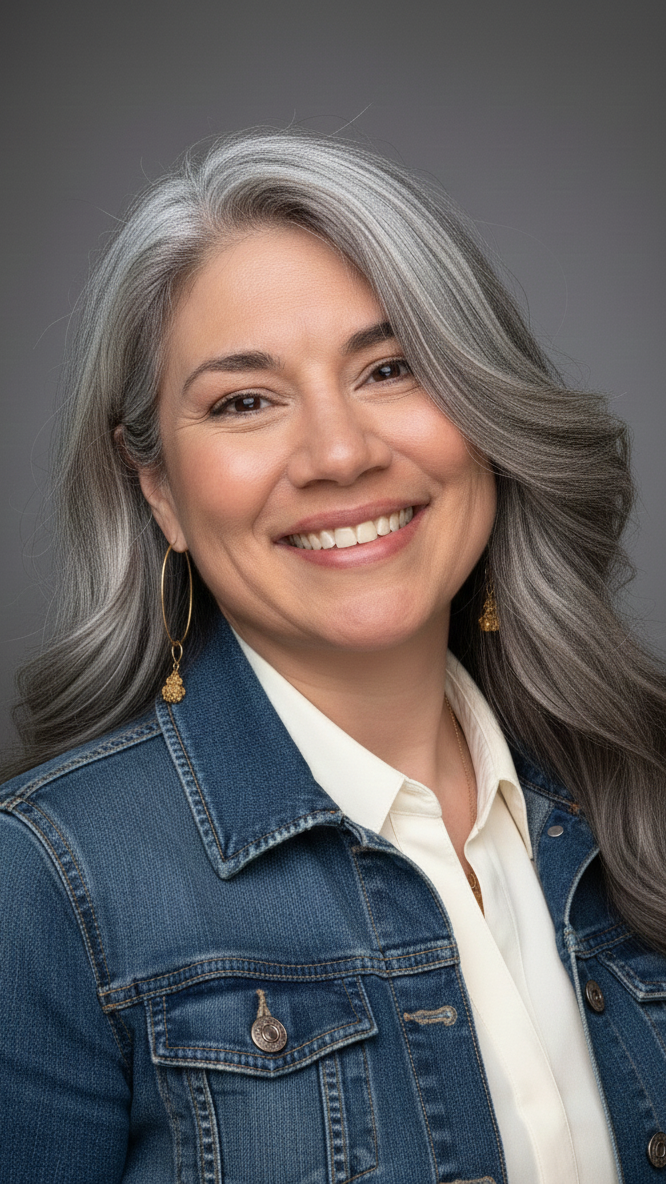
Esther Angell is a dynamic business leader with deep expertise in go-to-market (GTM) strategy across multiple industries. With a career spanning manufacturing, SaaS, and global technology ecosystems, she has built and scaled businesses that thrive by transforming strategy into execution.
As the founder of Insightfully Curious, Esther helps organizations and leaders harness curiosity to design GTM strategies to accelerate growth and create meaningful customer impact.
Beyond her work with clients and teams, Esther is active in her community and passionate about helping people and organizations think differently, connect more deeply, and move from big ideas to confident action.
Known for her warmth, wit, and clarity, she brings an engaging and practical perspective.